A knowledge base stores domain expertise as facts and simple if-then rules. In an expert system, it keeps specialized know-how separate from the procedures that execute it. section 2.1
Within an expert system, the knowledge base:
- Stores knowledge accumulated from domain experts, such as information about plants, soil, and weather. section 2.1
- Works with working memory and an inference engine, which evaluates rules against current facts and derives new information. section 2.1
- Allows expertise to be added, updated, or removed without changing the underlying program code. section 2.1
MYCIN
MYCIN applied a knowledge base of more than 500 if-then rules to bacterial-infection diagnosis, using patient information such as organisms, infection sites, fever, and headache. section 2.1
Figure 2.1 Flowchart of an expert system
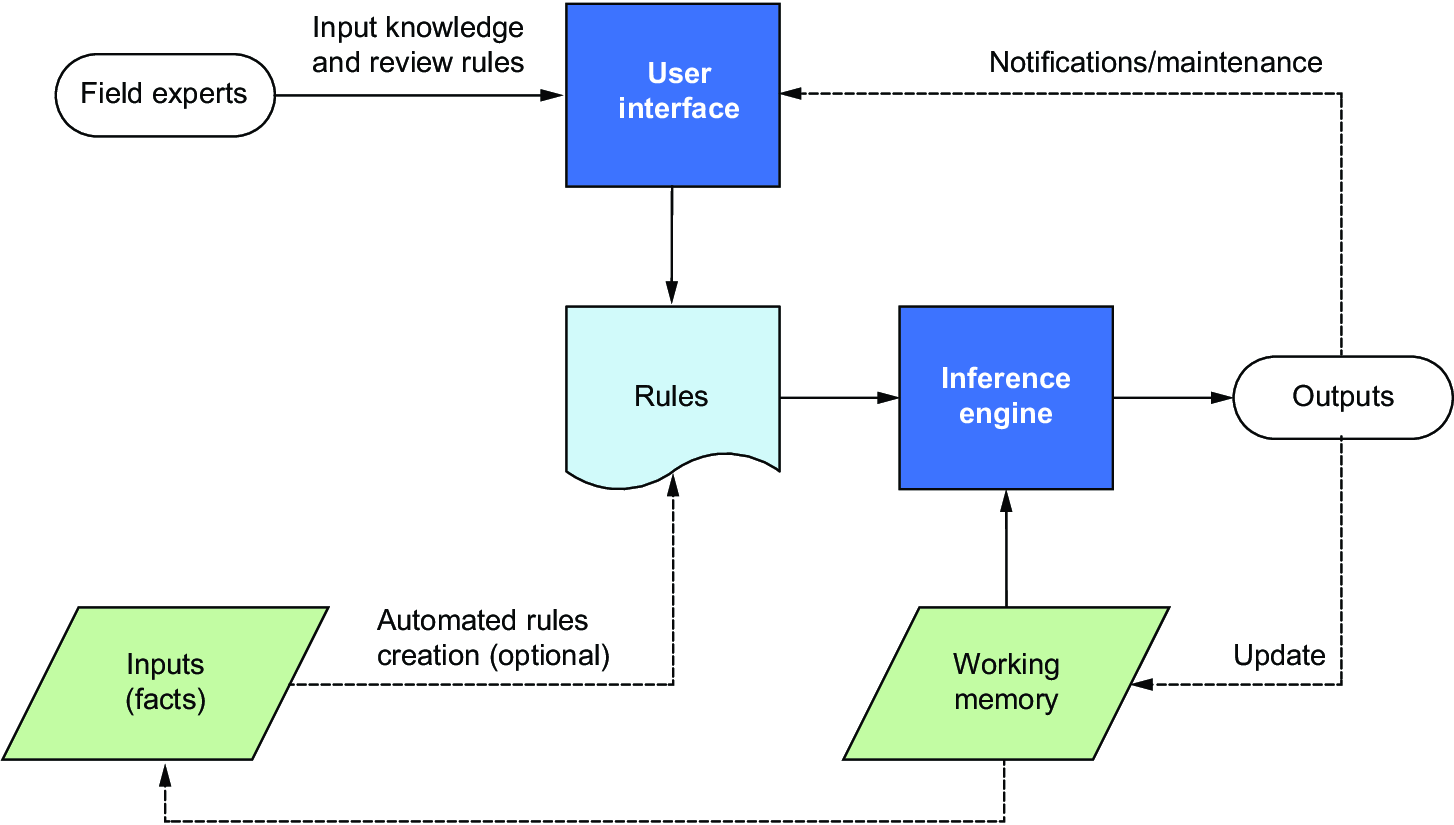
The flowchart shows how the knowledge base fits alongside working memory and the inference engine in an expert system. section 2.1









