The F-score evaluates a classification model when both kinds of mistakes matter: false positives and false negatives. It combines precision, which asks how many predicted positives are correct, with recall, which asks how many actual positives were found. section 7.9 section 7.18
The usual F-score is the F1-score. It is the harmonic mean of precision and recall: F1 = 2 × precision × recall ÷ (precision + recall). Unlike an ordinary average, it stays close to the smaller value, so one weak metric lowers the result. section 7.10
Use the F1-score when:
- You want one measure that rewards models only when both precision and recall are high. section 7.10
- Accuracy hides important errors, especially when positive and negative labels are unbalanced. section 7.4
- Both false positives and false negatives matter, but neither requires extra weighting. section 7.9
Medical diagnosis and spam filtering
A medical model may need strong recall so it misses few sick people, while a spam filter may need strong precision so it does not delete good emails. The F1-score is appropriate when both goals still matter together; use Fβ-score instead when one deserves more weight. section 7.10 section 7.11
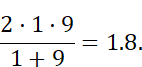
Use the equation view to connect the harmonic-mean idea with the F-score calculation. section 7.10