A feature store is a centralized layer for managing and serving machine-learning features. In financial workflows, it helps teams reuse shared variables consistently instead of rebuilding them in separate pipelines. section 5.1.4
A feature store can support financial workflows by:
- Sharing variables such as rolling_30d_spend across credit risk, AML, and marketing teams. section 5.1.4
- Recording feature changes and their creators for audit, and serving updated features alongside batch data during loan applications. section 5.1.4
- Enriching real-time fraud features for use in both training and inference before model serving. section 7.4.2
A feature store complements rather than replaces batch pipelines or Airflow. DAG tasks can publish daily aggregates to the store, which can flag incomplete bureau feeds. In fraud detection, event streams and computed features can feed a model-serving layer for transaction decisions or manual review. section 5.1.4 section 7.4.2
Figure 7.7 A conceptual illustration of the data assets layer for fraud detection. This diagram doesn't represent a fixed architecture or specific tech stack, but rather emphasizes the importance of organizing diverse internal and external data sources—such as transactions, behavioral logs, device fingerprints, and risk signals—into a coherent asset layer. Real-world implementations vary significantly across fintech, traditional banking, and e-commerce platforms, but the foundational goal remains the same: to make rich, timely, and relational data readily available for downstream fraud detection models and logic.
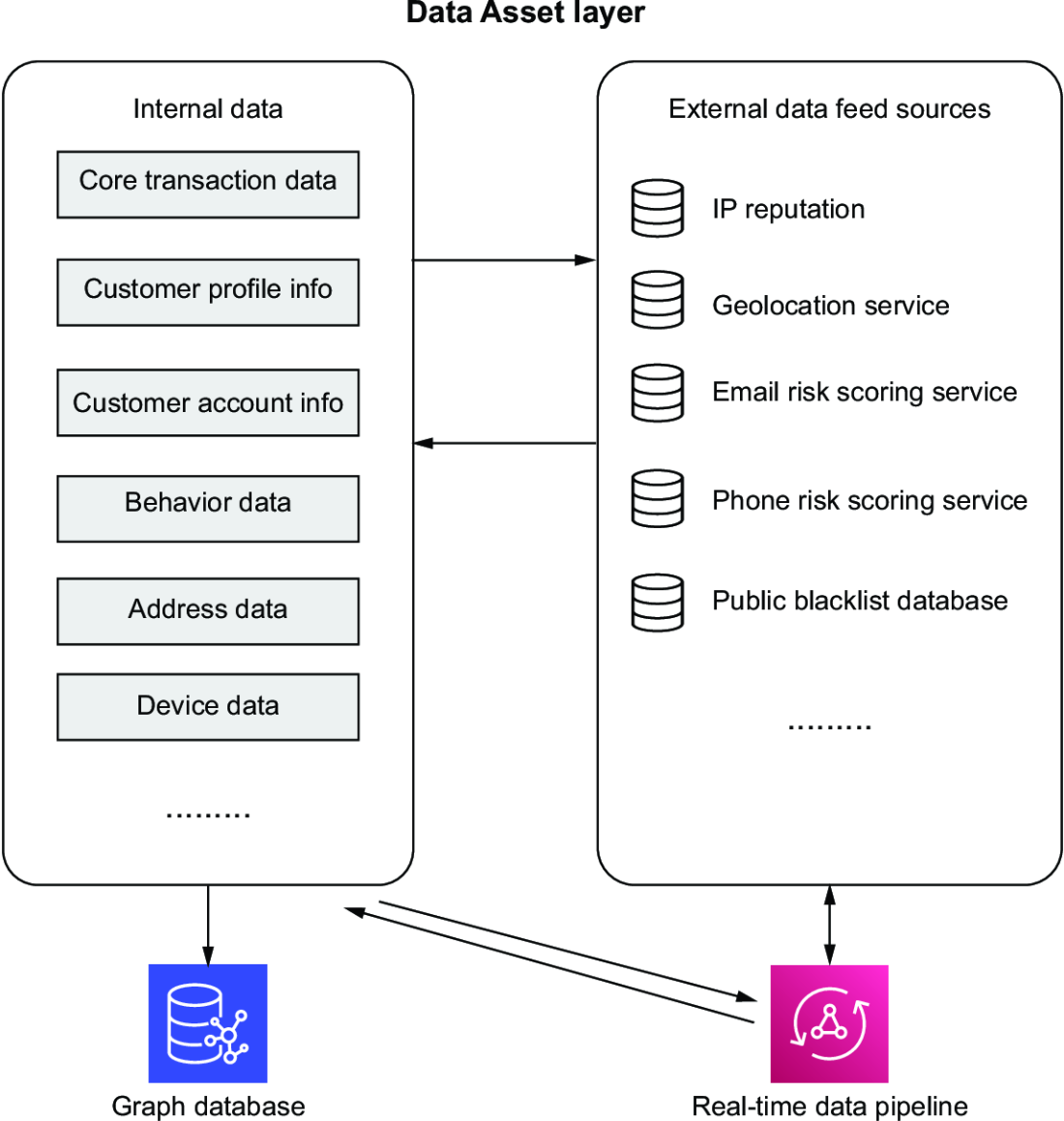
A conceptual view of the fraud data-asset layer, showing how diverse data can be organized for downstream detection without prescribing a fixed architecture or stack. section 7.4.2




