A sales funnel maps how prospects move from awareness toward a purchase. It narrows because many more people enter than buy, with prospects dropping out at each stage. section 25.3.5
The funnel turns sales into a repeatable process: attract prospects, identify leads, move them through defined stages, address objections, and work toward a signed deal. Marketing creates awareness through activities such as advertising, webinars, direct mail, and conference presentations; sales then advances prospects while coordinating with teams such as engineering, finance, and the CEO. section 25.1 section 25.3.5
A practical funnel depends on disciplined tracking:
- Represent each prospect’s current stage in a customer relationship management (CRM) system. section 25.3.5
- Keep every interaction, target company, and relevant contact up to date so sales and marketing can act on the same information. section 25.3.5
- Review movement through the funnel alongside customer segments, sales cycles, and win rates to understand where revenue is headed. section 25.1
Figure 25.1 Diagram of a typical sales or purchase funnel. Original work by BronHiggs, based on a well-known concept. Licensed as CC by SA4.0.
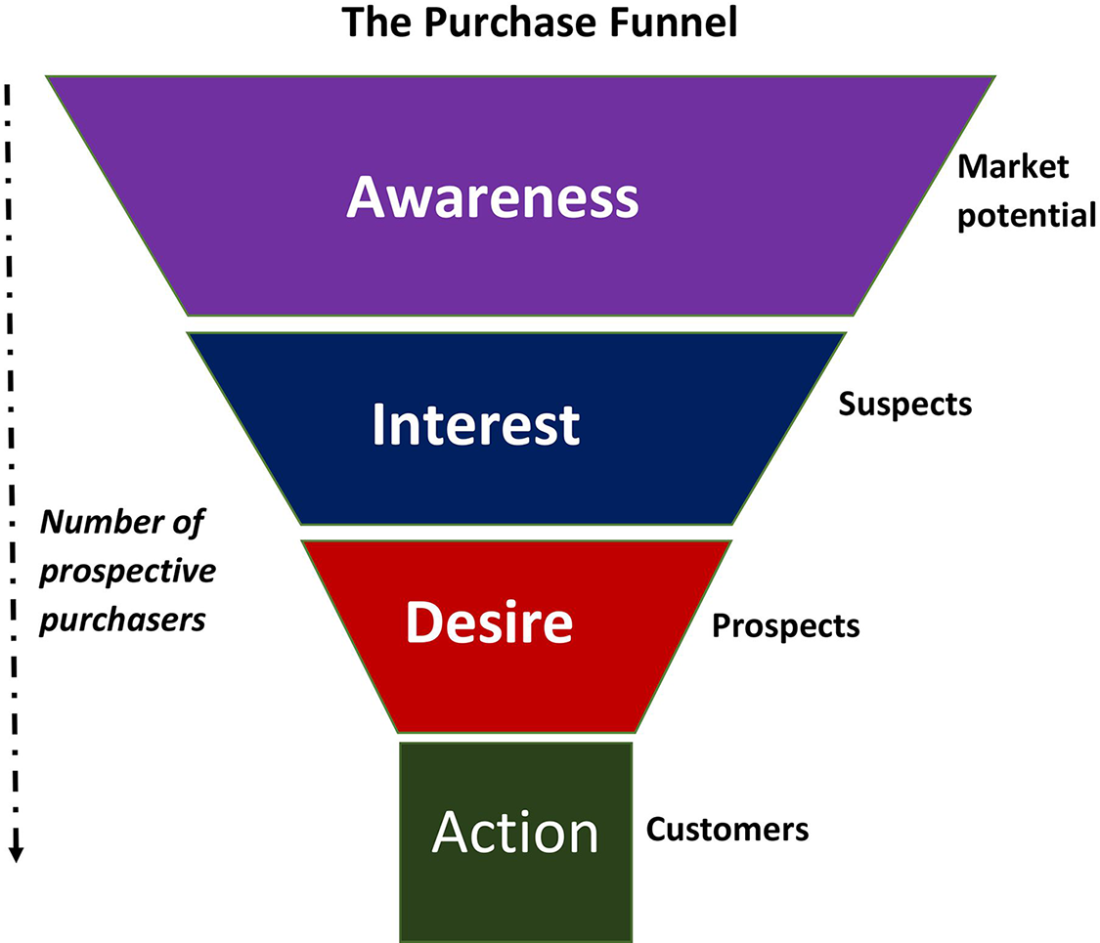
Use the funnel diagram to see the widening awareness end, successive dropouts, and narrowing path toward purchase. section 25.3.5

