Gap analysis systematically compares identified cybersecurity risks with existing controls to expose deficiencies, prioritize remediation, and support a more proactive risk-management posture. section 5.6.4
Use gap analysis to:
- Review how well identified control gaps are being closed, typically on a quarterly basis. section 5.6.4
- Incorporate stakeholder input so gap tracking supports a holistic, risk-based approach rather than reactive security work. section 5.6.4
- Pair gap-identification coverage with measures of vulnerability resolution and closure; coverage alone does not prove that deficiencies were mitigated. section 5.6.5
TechGuardian Solutions dashboard
TechGuardian Solutions increased gap-analysis coverage from 60% to 85% toward a 90% quarterly target. Cybersecurity performance problems fell from 20 to 10 incidents per quarter. The results indicate better visibility and fewer incidents, but the dashboard still needs resolution and closure data to demonstrate effective mitigation. section 5.6.5
Figure 5.11 The left side shows TechGuardian Solutions’ gap analysis metrics dashboard before implementing a continuous improvement program. The right side shows the gap analysis metrics dashboard after implementing the program and tracking metrics over time.
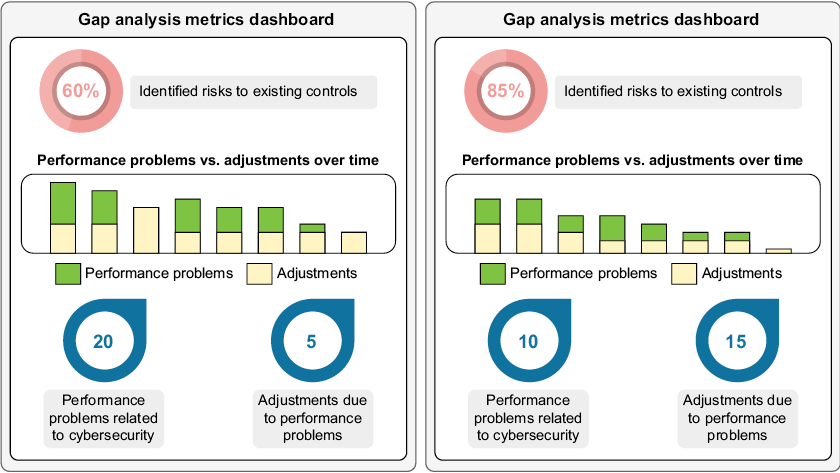
Compare the pre-program and post-program dashboard views to see how coverage and performance-problem metrics change over time. section 5.6.5

