liveBook · Manning

Generative adversarial network

As explained in Introduction to Generative AI, Second Edition

A generative adversarial network is a model composed of a generator and discriminator trained through competition between synthetic-data creation and authenticity evaluation.

A generative adversarial network (GAN) creates synthetic media through competition between two neural networks: a generator produces content, while a discriminator evaluates whether it appears authentic. The generator improves by trying to create outputs that the discriminator cannot distinguish from real examples. section 4.2

GANs became a foundational approach for creating or altering images and videos, including synthetic media and deepfake-related applications. Their prominence has since declined as diffusion models have become more common in state-of-the-art applications. section 4.2

GANs matter within a broader synthetic-media landscape:

  • They sit alongside autoencoders and diffusion models as techniques for generating or altering visual media. section 4.2
  • Synthetic media expands creative access while creating privacy and trust risks; verifying authenticity increasingly combines technical tools, authentication, policy, and public education. section 4.15
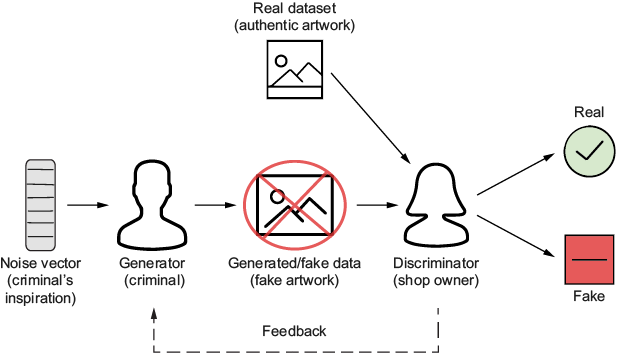
Figure 4.3 Creation of GANs using a generator and a discriminator
A screenshot of a phone

AI-generated content may be incorrect.

Visualizes GAN construction through the interaction of a generator and a discriminator. section 4.2

How Introduction to Generative AI, Second Edition covers it

How deep it goes
Explains the generator–discriminator idea and historical position, but remains an overview rather than an implementation treatment.
Examples
Uses image and video creation or alteration as the main application context, alongside comparisons with autoencoders and diffusion models.
What you can do after
Evaluate GANs as a synthetic-media technique and distinguish their historical role from diffusion models.
How it connects
Connects GANs with synthetic media, autoencoders, diffusion models, deepfakes, authenticity detection, privacy, and trust.

Also explained in

Compare how 12 books explain generative adversarial network →

Related concepts

This explainer was generated by Manning's knowledge graph from the text of Introduction to Generative AI, Second Edition. The section links point to the parts of the book it draws on.









