liveBook · Manning

Generator

As explained in Introduction to Generative AI, Second Edition

A generator is the component of a generative adversarial network that produces synthetic data intended to resemble authentic data.

A generator is the part of a generative adversarial network (GAN) that creates synthetic data, such as images, designed to resemble authentic data. It improves through competition with a discriminator, which judges whether produced data looks real or fake. section 4.2

The counterfeit-artwork analogy

Imagine a criminal making counterfeit artworks while a shop owner learns to spot them. The generator is the criminal: it studies the discriminator’s feedback and gradually produces more convincing forgeries. The analogy captures the competitive feedback loop without describing implementation details. section 4.2
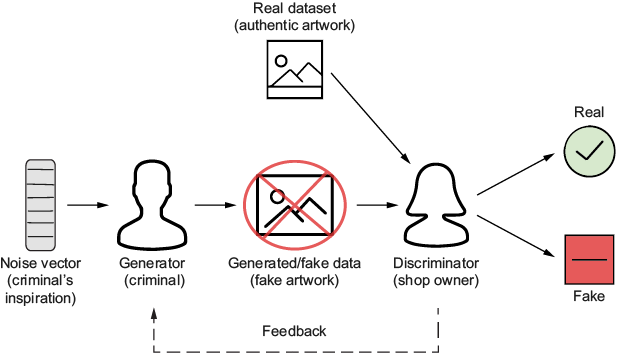
Figure 4.3 Creation of GANs using a generator and a discriminator
A screenshot of a phone

AI-generated content may be incorrect.

Use the diagram to see how the generator and discriminator form the central competitive structure of a GAN. section 4.2


How Introduction to Generative AI, Second Edition covers it

How deep it goes
Defines the generator’s role and explains its feedback loop intuitively, stopping short of implementation or mathematical detail.
Examples
Uses counterfeit artworks and synthetic images to illustrate increasingly realistic generation.
What it assumes
Introduces the generator alongside the discriminator without assuming implementation knowledge.
What you can do after
Evaluate and understand the generator’s role in the GAN feedback loop.
How it connects
Connects the generator to generative adversarial networks, discriminators, synthetic data, and image generation.

Also explained in

Compare how 12 books explain generator →

Related concepts

This explainer was generated by Manning's knowledge graph from the text of Introduction to Generative AI, Second Edition. The section links point to the parts of the book it draws on.








