liveBook · Manning

Happy path

As explained in Architecture Modernization: Socio-technical alignment of software, strategy, and structure

A happy path is the primary expected sequence of activities in a process when no exceptional conditions occur.

A happy path is the primary expected sequence of activities in a process when no exceptional conditions occur. In EventStorming, it provides the main business narrative while leaving room to examine alternative scenarios. section 7.1.1

Keep the flow at the level of domain intent rather than interface or database mechanics. Name meaningful events such as Membership Requested or Membership Application Received, then branch below the main timeline to expose edge cases and other scenarios. section 7.1.1

Use the happy path to:

  • Make the expected order of business events visible from left to right. section 7.1.1
  • Compare the primary flow with exceptions, edge cases, and parallel scenarios. section 7.1.1
  • Avoid hiding important complexity behind vague activity names or excessive implementation detail. section 7.1.1
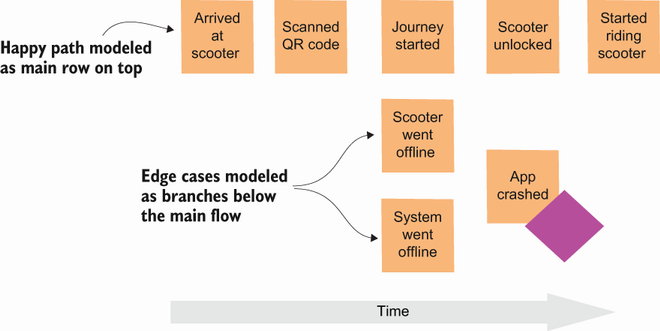
Figure 7.4 Modeling edge cases as branches below the main timeline

Model the happy path as the main timeline and place edge cases on branches beneath it. section 7.1.1


How Architecture Modernization: Socio-technical alignment of software, strategy, and structure covers it

How deep it goes
Explains timeline placement, event granularity, and branching, but stops short of implementation mechanics.
Examples
Uses membership-request events and branches below the main timeline to represent edge cases and alternative scenarios.
What you can do after
Apply it via EventStorming to map an expected flow and identify exceptional or parallel scenarios.
How it connects
Connects happy paths with EventStorming, domain events, edge cases, scenarios, and business narratives.

Also explained in

Compare how 4 books explain happy path →

Related concepts

This explainer was generated by Manning's knowledge graph from the text of Architecture Modernization: Socio-technical alignment of software, strategy, and structure. The section links point to the parts of the book it draws on.

