liveBook · Manning

Server

As explained in Fundamentals of Cybersecurity

A server is a computing system or software process that provides services or resources to other systems over a network.

A server is a computer that provides resources or services to clients on a network. A client requests something; the server responds with the requested resource or service and remains available to serve clients. section 11.3.1

Common server roles include:

  • Web servers host websites and deliver web pages. section 11.3.1
  • File servers provide shared storage, while application servers host and deliver applications. section 11.3.1
  • Email servers provide email services. section 11.3.1
Figure 11.1 Illustration of a request from the network of a small company traveling through the internet to the server located in the “Big company”.
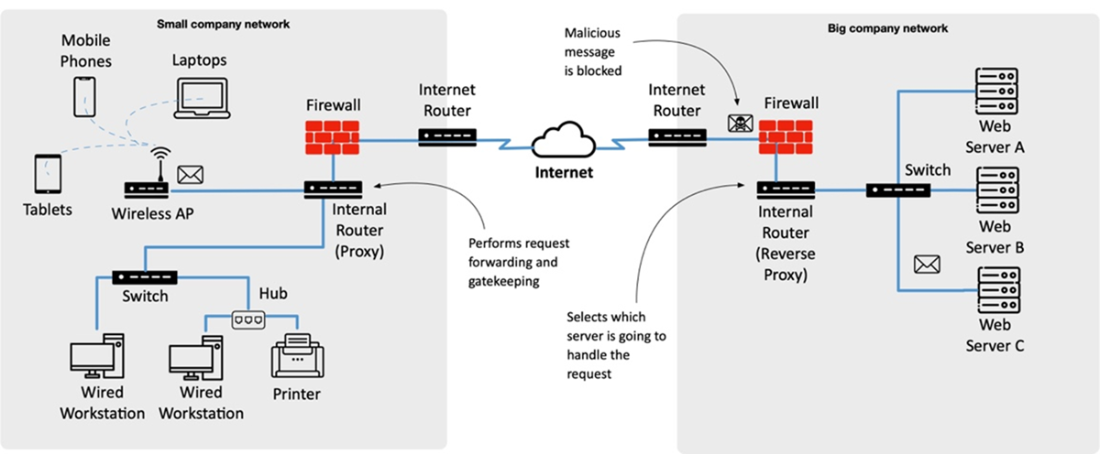
Trace a webpage request from a small company's network to a web server at another company. section 11.2


How Fundamentals of Cybersecurity covers it

How deep it goes
Defines servers, explains request and response roles, and lists service examples without detailing server implementation.
Examples
Uses web, file, email, and application servers as examples of services provided.
What you can do after
Understand how clients request services and resources from servers.
How it connects
Connects servers with clients, endpoints, and network requests.

Also explained in

Compare how 14 books explain server →

Related concepts

This explainer was generated by Manning's knowledge graph from the text of Fundamentals of Cybersecurity. The section links point to the parts of the book it draws on.











