HTTPS is the secure, encrypted transport used to send web requests and responses. It commonly carries REST API communication, allowing clients to use a service without knowing how its server-side code works. section 9.3.1
From a browser request to a model API
When someone searches Google, a device sends a request to a server and receives results without running the server’s code. The same pattern can send customer-churn inputs to a remote machine-learning model and return its prediction. section 9.3.1
Figure 9.6 This diagram shows a simplified version of making an API request. Here, the client represents your device, such as phone or computer. The client sends a request to a remote server, which then computes some results (such as search results) and returns them to the user. The user never directly interacts with or runs any code.
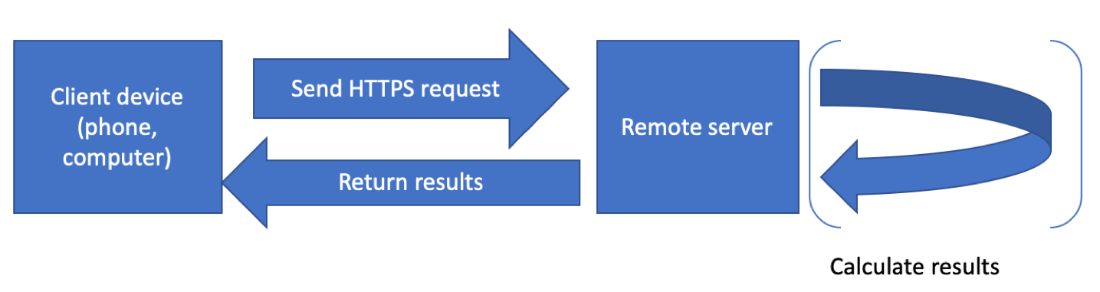
Follow the client-server flow from a device sending an API request to a remote server returning computed results. section 9.3.1