A hypervisor creates and manages virtual machines on a physical host. It isolates guest machines from one another, schedules their requests for physical hardware, and presents each guest with virtual hardware such as CPUs, memory, networking, and storage. section 3.1
Virtualization uses three related roles:
- The host machine supplies the physical hardware. section 3.1
- Each guest is a virtual machine isolated from other guests. section 3.1
- The hypervisor provides the virtual hardware platform and schedules access to the host’s resources. section 3.1
On AWS, Nitro combines a KVM-based hypervisor with customized hardware. Current generations of AWS virtual machines use hardware-assisted virtualization, called a hardware virtual machine (HVM), to provide fully virtualized hardware and fast access to underlying resources. section 3.1.1
Launching an EC2 virtual machine
An Amazon Machine Image (AMI) supplies a read-only filesystem containing an operating system, software, and configuration. When the hypervisor starts a VM from that virtual appliance, repeated launches can produce the same configured state. This supports workloads such as web applications, enterprise applications, and data processing. section 3.1.1 section 3.1
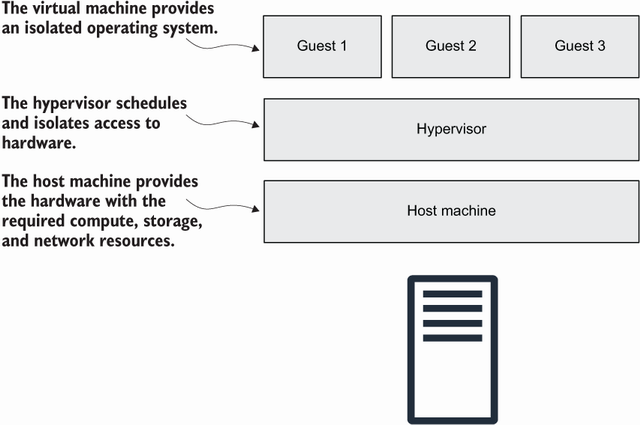
Use the virtualization-layer diagram to trace the relationship between physical hardware, the hypervisor, and isolated guest machines. section 3.1


