Infrastructure as a service (IaaS) provides virtualized computing resources over the internet. The provider manages the data center, hardware, and virtualization; the customer manages the operating system, applications, and data. This division gives organizations control over their software while avoiding management of physical infrastructure. section 13.5 section 13.8
The service model determines how work and control are divided:
- With IaaS, customers manage operating systems, applications, and data. section 13.5
- With platform as a service (PaaS), providers also manage the operating system; with software as a service (SaaS), providers manage nearly all layers. section 13.5
Figure 13.4 Comparison of responsibilities of users and vendors for the distinct service models
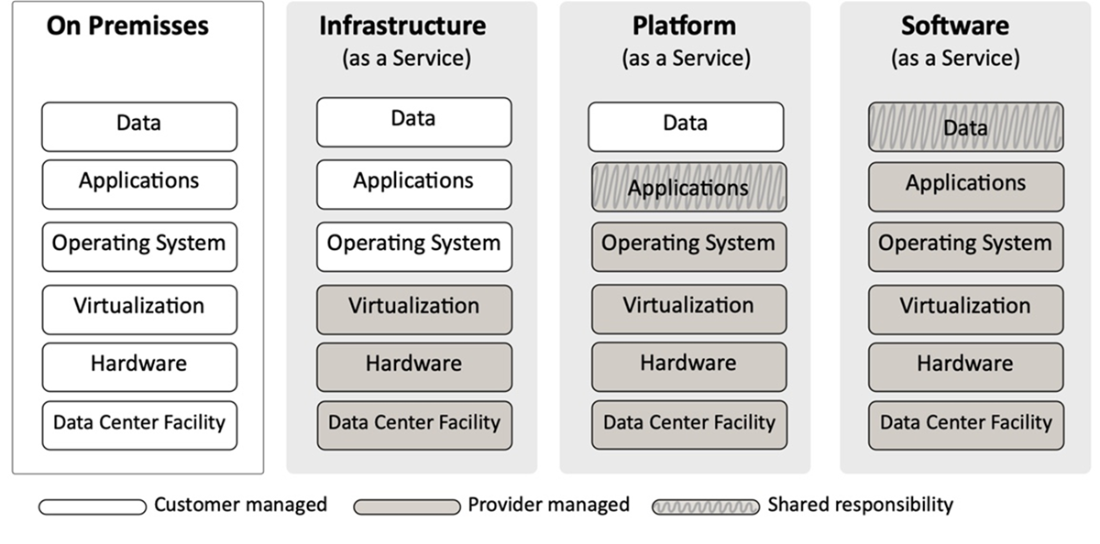
Compare which technology layers the provider and customer manage across IaaS, PaaS, and SaaS. section 13.5
|
Service
Model
|
Examples
|
|
Infrastructure as a Service (IaaS)
Provides
virtualized computing resources (servers, storage, networking) on demand.
|
Amazon EC2,
Microsoft Azure Virtual Machines, Google Compute Engine.
|
|
Platform as a Service (PaaS)
Offers a
ready-to-use platform for building, testing, and deploying applications
|
Google App
Engine, Microsoft Azure App Service, Heroku.
|
|
Software as a Service (SaaS)
Delivers
fully managed software applications over the internet
|
Gmail,
Microsoft 365, Slack, Atlassian JIRA
|
Examples of IaaS services include Amazon EC2, Microsoft Azure Virtual Machines, and Google Compute Engine. section 13.5