Impact mapping structures stakeholder conversations around how potential deliverables connect to business goals. It makes the path from objectives to solutions visible without treating the solution as the starting point. section 4.3.2
Build the map from broad intent toward possible action:
- Start with a business goal. section 4.3.2
- Identify actors who may help achieve the goal. section 4.3.2
- Describe impacts as metric improvements or behavior changes associated with each actor. section 4.3.2
- Connect impacts to potential deliverables, then use gaps or vague deliverables to guide further discovery. section 4.3.2
Revenue-growth mapping
A stakeholder identified increasing revenue by $20 million in one business area as a top goal. The map focused on a user subset representing 45% of users, two possible revenue-related impacts, and a deliverable connected to both impacts. Because “using data better” remained vague, the map directed follow-up discovery toward concrete uses such as better recommendations. section 4.3.2
Modernization workshop
During modernization planning at a large Scandinavian enterprise, participants used impact mapping to connect business goals with initiatives and deliverables touching capabilities in a tightly coupled monolith. Those connections helped frame later work on domain exploration, a first modernization slice, architecture, and delivery. section 4.4.2
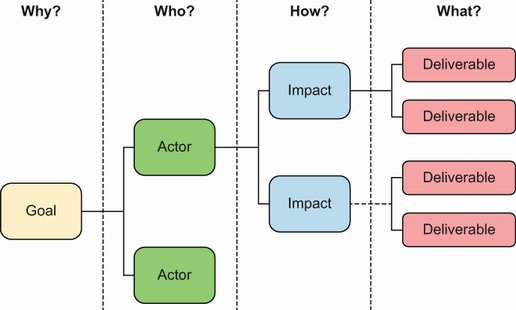
Use the syntax diagram to inspect the visual relationships among goals, actors, impacts, and deliverables. section 4.3.2
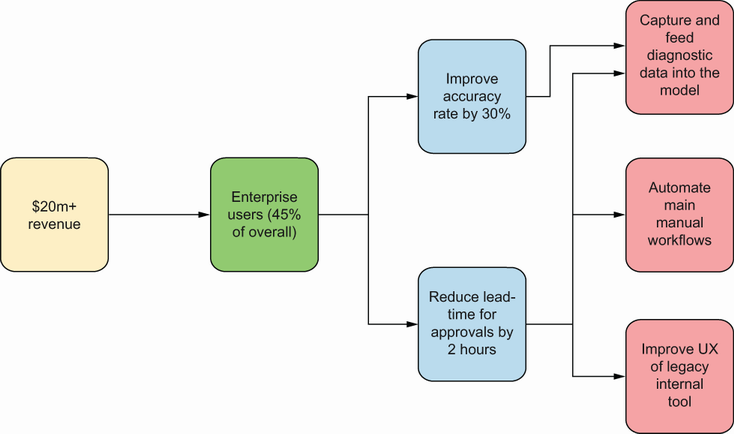
Use the map extract to examine how a business goal, user group, impacts, and a shared deliverable expose a high-leverage opportunity. section 4.3.2


