An actionable insight is a finding interpreted well enough to guide a decision or corrective action. A metric supplies a measure; the insight explains what that measure means for risk, business goals, or security performance—and where attention should go next. section 1.0 section 4.0
Turn a measurement into an actionable insight by:
- Checking its relevance. Prioritize metrics that expose significant risk or meet an immediate compliance need, rather than treating every available measure as equally useful. section 3.3.2
- Interpreting patterns in context. Compare results with a target or earlier performance, and examine causes or affected groups before recommending a response. section 4.2.5 section 13.6.2
- Naming an action and its audience. Leadership needs business effects and major risks; security leaders also need control status and operational detail to allocate resources. section 4.2.5
From patching time to a decision
A report shows that critical-system patching takes 48 hours against a 24-hour target. The actionable insight is not merely that patching has improved: the remaining gap calls for continued work on the patching process. Reporting the gap alongside its risk gives the CISO a basis for prioritizing that work. section 4.2.5
From login failures to follow-up
Suppose incorrect passwords account for 40% of failed logins, while mobile devices show more invalid-credential errors. Possible responses include password-practice training and investigation of mobile login procedures. Check whether failures cluster by user, department, or time before deciding where to focus effort. section 13.6.2
Figure 5.11 The left side shows TechGuardian Solutions’ gap analysis metrics dashboard before implementing a continuous improvement program. The right side shows the gap analysis metrics dashboard after implementing the program and tracking metrics over time.
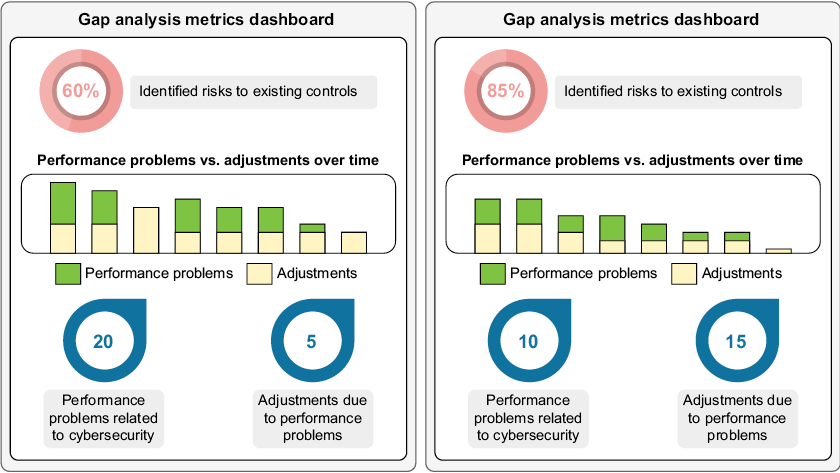
Compare oversight metrics before and after a continuous improvement program. The dashboard makes changes over time visible so teams can identify where monitoring or resources are still needed. section 5.6.5


