Lead time measures how long a software change takes to move from code commit to production. For a deployment pipeline, it is the time from a change entering the queue until the change is deployed. section 1.1.2 section 1.2.1
A pipeline’s lead time has two components:
- Wait time: how long a change waits in the queue before processing begins. section 1.2.1
- Processing time: how long the pipeline takes to compile, test, analyze, and deploy the change. section 1.2.1
Setting a pipeline target
A quality attribute scenario can require pipeline tests to complete within 10 minutes after a developer pushes a change, with feedback that the change is releasable. The lead-time target should account for both waiting and test execution. section 5.4.1
Figure 1.6 Fast flow requires a fast deployment that can handle the stream of changes from the development teams
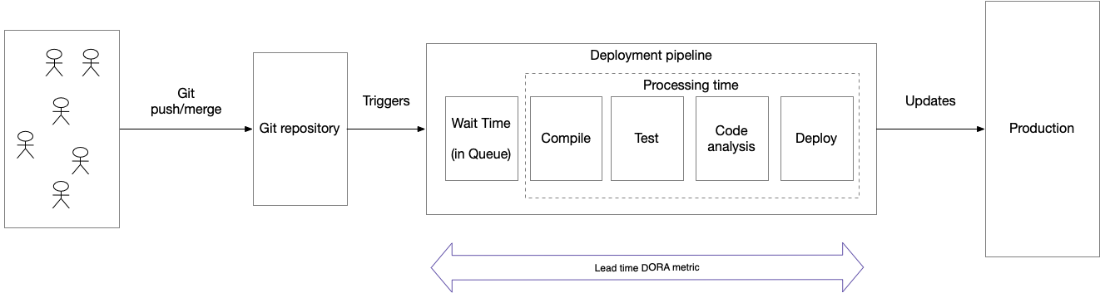
The figure illustrates why fast flow depends on a deployment pipeline that can handle the stream of changes from development teams. section 1.2.1









