A data lifecycle is the sequence of stages data passes through, from creation or acquisition until secure destruction. Security measures should follow data through every stage because each has different handling needs. section 14.3 section 14.3.2
The lifecycle has six phases:
- Create or acquire data, such as by filling out a form or generating system logs. section 14.3.2
- Store data securely so it can be retrieved when needed. section 14.3.2
- Use data for activities such as analysis, decisions, or reporting; maintain its integrity and accuracy. section 14.3.2
- Share data with authorized people or systems, transmitting it securely to its intended recipients. section 14.3.2
- Archive data that is no longer actively used but must be retained for reference or compliance. section 14.3.2
- Destroy data securely when it is no longer needed so sensitive information cannot be recovered or misused. section 14.3.2 section 14.5
Classify and label data when it is created so its sensitivity guides how it is used, stored, and shared. Retention policies determine how long to keep it; secure destruction completes the lifecycle. Consider its state, too: stored, transmitted, or processed data faces different threats and needs different protection. section 14.3 section 14.5
Figure 14.6 The secure data handling lifecycle diagram.
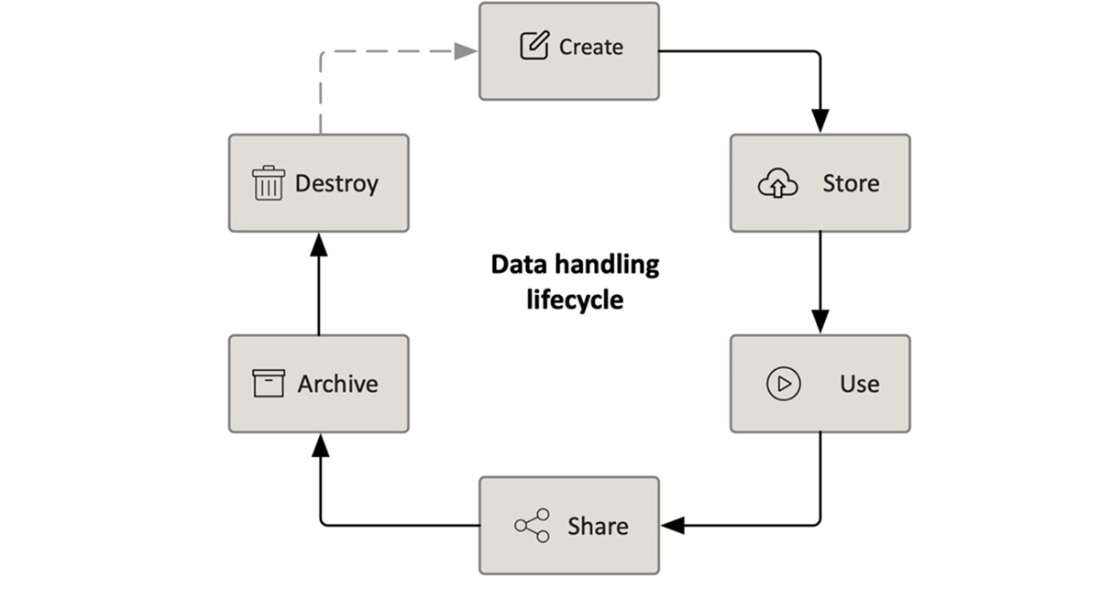
Use the lifecycle diagram to see the successive phases from creation through destruction. section 14.3.2







