A machine learning workflow is the life cycle from creating a model through deployment, operation, and retirement. It answers why the system exists; infrastructure answers how it runs. section 3.4
A prototype may live on one data scientist’s laptop, but LLM systems make that approach difficult: model storage, production complexity, and operational tooling demand sturdier infrastructure. section 3.4
A production-oriented workflow connects:
- Model creation, deployment, operation, and retirement. section 3.4
- Data stores, orchestrators, pipelines, streaming integrations, and container registries around the model. section 3.4
- DataOps and DevOps capabilities with machine-learning infrastructure. section 3.4
Figure 3.7 A high level view of an MLOps infrastructure with LLMs in mind. This diagram attempts to cover the full picture and the complexity of the many tools involved to make ML models work in production.
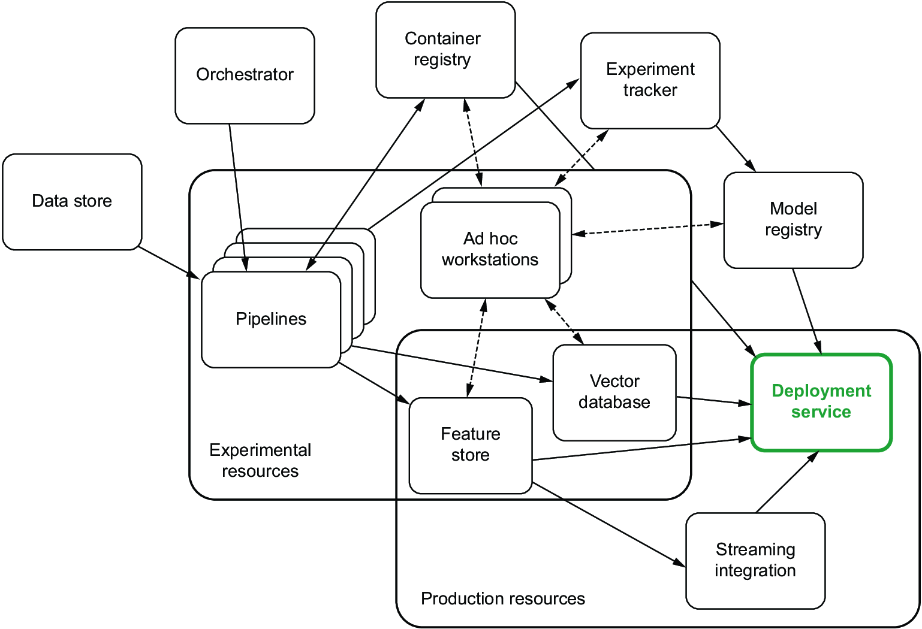
Use the infrastructure overview to trace the full production picture and the many tools supporting machine-learning models. section 3.4






