A machine learning workflow turns product questions into an iterative cycle of data preparation, model development, evaluation, and action. It links technical experimentation with decisions about users, product activity, and business outcomes. section 4.0
A practical workflow typically moves through these connected activities:
- Translate questions about users or product behavior into machine learning problems. section 4.0
- Prepare appropriate training data and choose analytical approaches such as clustering, classification, time series analysis, or recommendation algorithms. section 4.0
- Define performance metrics, tune technical parameters, interpret outputs, and use the findings to improve activities. section 4.0
- Continue refining data, monitoring errors and harmful outputs, collecting feedback, and automating updates through an MLOps pipeline. section 5.5
Diagnosing product drop-off
A product team notices that users take an initial website tour and consume recommendations but rarely fill their carts. The team segments users, studies product usage, predicts bouncing or churn, and uses the results to improve its activities. section 4.0
Figure 4.1 The iterative loop for delivering high-value predictive AI
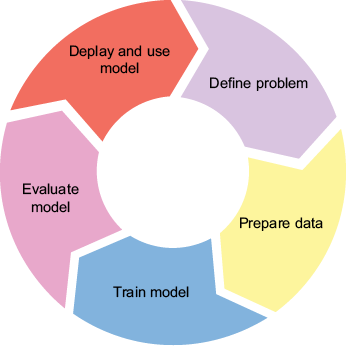
Use the iterative-loop figure to see how predictive-AI work cycles between questions, data, algorithms, evaluation, and product action. section 4.0






