Mean time to detect measures the elapsed time between a security event occurring or beginning and its detection. It gives security leaders a concise view of monitoring performance and exposure before response begins. section 12.5.1
Use MTTD to:
- Report detection performance for major and high-severity incidents against defined thresholds. section 12.5.1
- Compare detection trends with incident counts and severity over recent months. section 12.5.1
- Frame questions about delayed discovery, including why an event was not detected earlier. section 12.5.1
Executive security dashboard
A monthly dashboard can show MTTD for major and high-severity incidents, identify whether results met thresholds, and place those results beside incident totals, severity, type, and six-month trends. section 12.5.1
Figure 12.2 Executive security operations dashboard showing high-level metrics and other high-level information
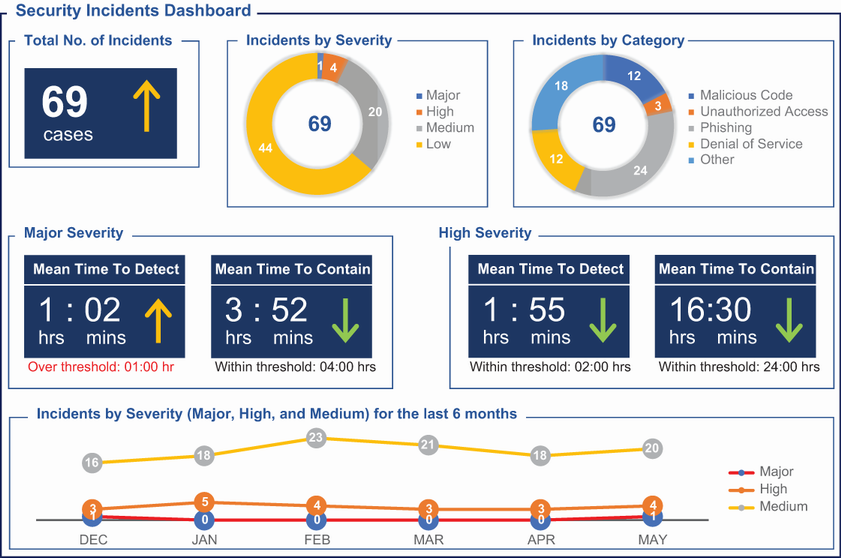
Inspect the dashboard artifact to see how MTTD is positioned among executive-level security operations metrics. section 12.5.1


