A mentor is an experienced person who voluntarily shares guidance, support, and advice with someone less experienced. In software development, the role reaches beyond technical questions: a mentor helps a mentee navigate challenges, build confidence, set goals, and grow professionally and personally. The relationship depends on trust, not simply on the mentor having answers. section 9.1 section 9.0
A mentor is not the same as a trainer. Training usually concentrates on specific skills through structured instruction. Mentoring follows the mentee’s aspirations and problems over time; regular conversations can address a career decision one week and a workplace setback the next. A mentor can still teach, but should not turn every meeting into a lesson. section 9.1.1
A practical mentoring relationship needs attention from both people:
- Listen without judgment, respect confidentiality, and be reliable. If a meeting must move, give notice and find another way to stay in touch. section 9.2
- Ask about the mentee’s goals, strengths, and preferred way of learning. Offer hands-on coaching or resources for independent learning as appropriate. section 9.1.3
- Give specific, constructive feedback that recognizes accomplishments as well as areas to improve. Share experience without assuming that what worked for you will work for everyone. section 9.1 section 9.1.2
- Let the mentee define what they want from the relationship and help set its duration and meeting schedule. Support their decisions rather than taking ownership of their progress. section 9.5.4 section 9.6
Talking through a failed project
Suppose a developer believes a failed application migration proves they are incapable. A mentor can listen to what happened and ask about the conditions around the work. In one such experience, nearly every other developer left, replacements were denied, and the project failed. A mentor helped the remaining developer see the role of mismanagement rather than treating the outcome as a purely personal failure. The lesson is not to promise the same explanation for every setback; it is to examine the circumstances before giving advice. section 9.1.2
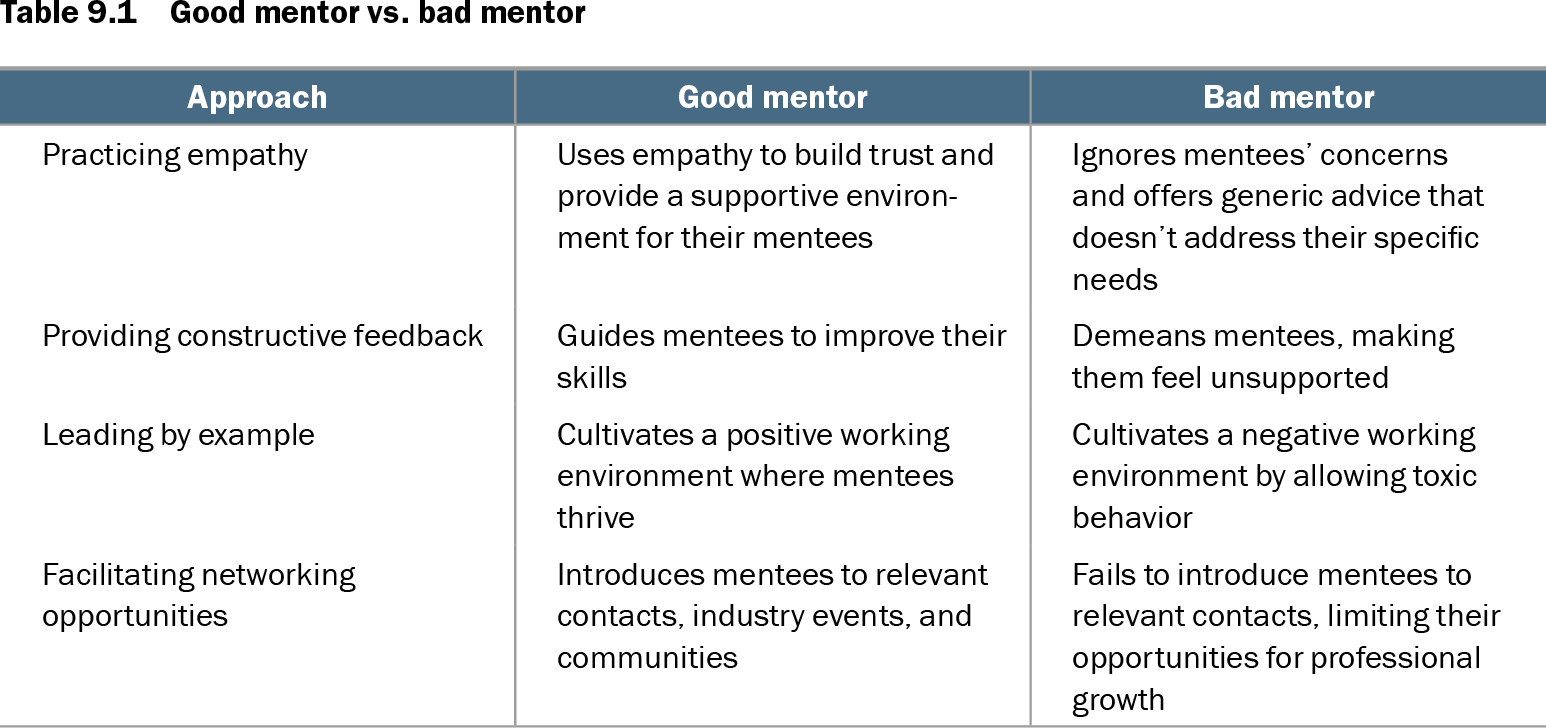
Table 9.1 Good mentor vs. bad mentor (view table figure)
| Approach |
Good mentor |
Bad mentor |
|---|---|---|
| Practicing empathy |
Uses empathy to build trust and provide a supportive environment for their mentees |
Ignores mentees’ concerns and offers generic advice that doesn’t address their specific needs |
| Providing constructive feedback |
Guides mentees to improve their skills |
Demeans mentees, making them feel unsupported |
| Leading by example |
Cultivates a positive working environment where mentees thrive |
Cultivates a negative working environment by allowing toxic behavior |
| Facilitating networking opportunities |
Introduces mentees to relevant contacts, industry events, and communities |
Fails to introduce mentees to relevant contacts, limiting their opportunities for professional growth |
Compare supportive and harmful responses across empathy, feedback, role modeling, and networking. Use the contrasts to check whether your behavior makes it easier for a mentee to seek help and grow. section 9.1
Mentors need support too. Before moving into a lead developer role, identify the skills and challenges on which you want guidance, then seek several mentors with different experience. One person’s route to success may not fit yours. As your own mentees gain knowledge and confidence, encourage them to guide others—even a junior developer may have a skill worth sharing. Keep learning from the people you mentor. section 12.2.1 section 9.4.1 section 9.5.4