A message broker receives, routes, and delivers messages between application components. In asynchronous messaging, it decouples producers from consumers: a consumer can connect later, and services can isolate message flows through topics. section 7.1.4
Using a message broker introduces several implementation concerns:
- Producers and consumers must know the broker location and how to publish or subscribe. section 7.1.4
- Topics group messages so services sharing one broker can exchange different message streams. section 7.1.4
- Applications require broker-specific client libraries, protocols, versions, credentials, and connection configuration. section 7.1.4
Kafka in a Kubernetes application
A Conference application runs Kafka alongside its services, Redis, and PostgreSQL in a Kubernetes cluster. The services use Kafka to exchange asynchronous messages, while pod readiness and restart behavior reveal whether dependencies such as Kafka are available. section 2.2.1
Figure 7.10 Asynchronous messaging interactions
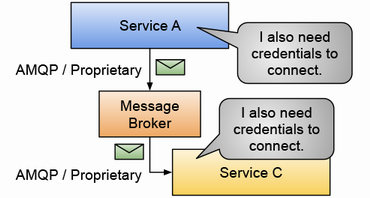
Use the interaction diagram to trace a producer placing a message into the broker and a later consumer retrieving it. section 7.1.4
Figure 7.11 Dependencies and API challenges
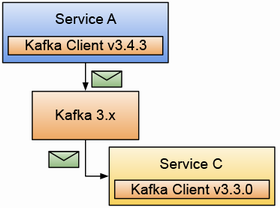
Use the dependency diagram to inspect how Kafka client libraries and broker-specific APIs affect application services. section 7.1.4


