Node degree counts the links incident to a node. Measuring degree across a network helps reveal whether connections are distributed evenly or concentrated in a small number of highly connected nodes. section 5.0
For directed networks, separate the connections by direction:
- In-degree counts incoming connections. section 5.6
- Out-degree counts outgoing links. section 5.6
- The overall degree distribution describes how many links nodes typically have. Random-network models are associated with a Gaussian distribution, whereas real-world networks commonly follow a power-law distribution with many low-degree nodes and a few highly connected ones. section 5.0 section 5.6
Web pages and URL links
Treat web pages as nodes and URL links as directed relationships. A page’s in-degree counts pages linking to it, while its out-degree counts the links it publishes. Comparing these values helps distinguish rarely connected pages from unusually connected ones. section 5.0
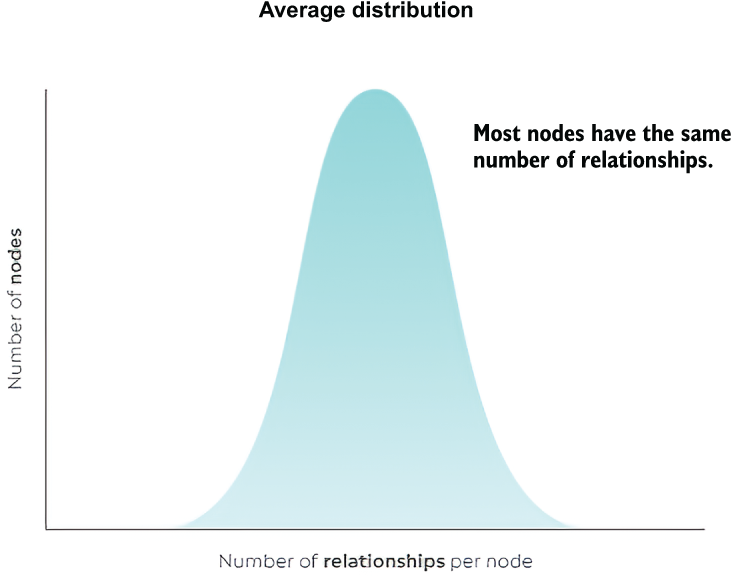
Use the random-network distribution figure to compare the expected concentration of node links. section 5.0
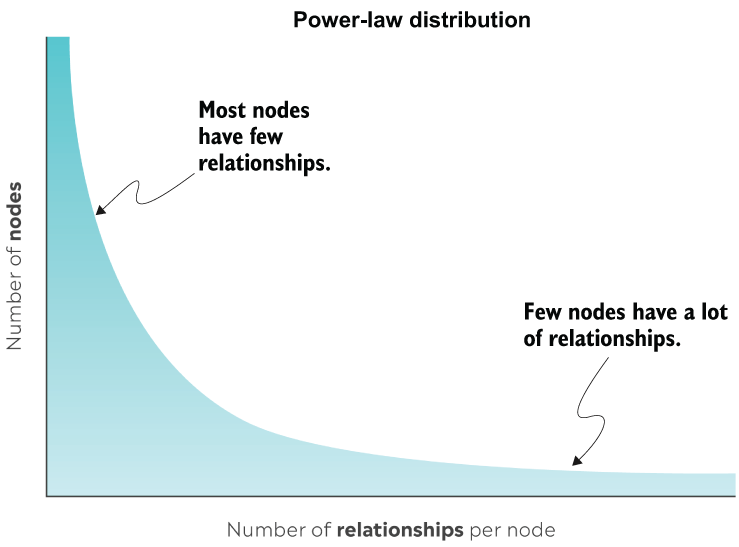
Use the scale-free distribution figure to see how real-world networks can contain many low-degree nodes and a small number of hubs. section 5.0



