A persona is a realistic but fictional profile of a target user. It describes relevant details such as goals, frustrations, occupation, and family circumstances, helping teams empathize with the people they are designing for. section 4.1.3
Personas connect user experience decisions with visual design, development, and business goals. Keep them visible throughout the project so decisions remain centered on user needs rather than aesthetics or technical assumptions. section 4.1.3
Build and use personas practically:
- Base the profile on validated user data and observations whenever possible. section 4.1.3
- When research resources are limited, consult support forums and existing knowledge, while checking for personal bias. section 4.1.3
- Reference the persona during wireframing, visual design, development, and later decisions. section 4.1.3
Persona card
A completed persona card might describe a fictional target user’s age, occupation, marital status, number of children, goals, and frustrations. These details give the team a concrete perspective for judging whether a website supports that user’s needs. section 4.1.3
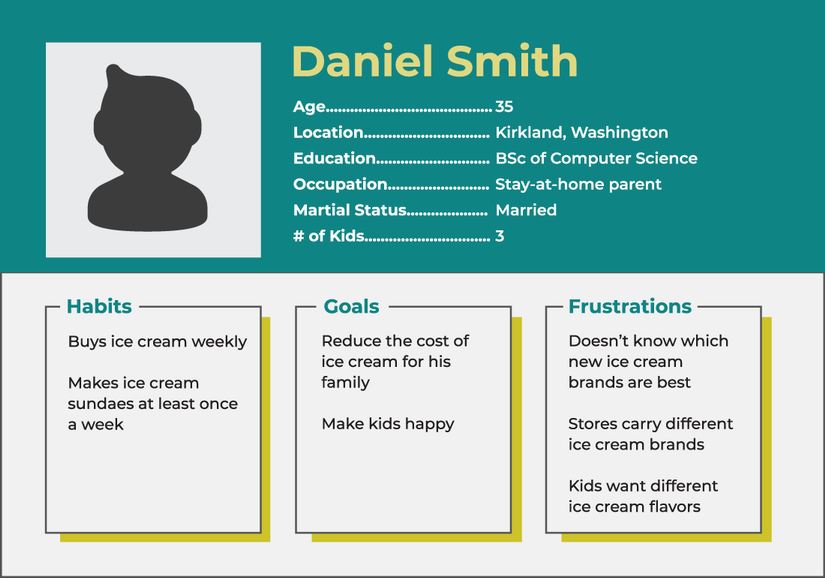
Browse an example persona card showing how a fictional target user’s characteristics, goals, and frustrations can be organized. section 4.1.3





