Personalization adapts an AI system’s responses to a particular user’s interests, profession, time zone, preferences, and history. A weekly planning assistant, for example, can remember familiar tools and routines instead of asking for them repeatedly. section 10.4
The experience depends on extended context and dynamic memory. Systems can combine persistent profiles, semantic memory, vector search, and retrieval infrastructure to preserve information across sessions, documents, and interactions. Personalization can also shape images, voices, and interfaces. section 10.4
Personalization creates practical benefits but raises important questions:
- Users may need to inspect, edit, limit, transfer, or reset what an assistant remembers. section 10.4
- Memory may remain inconsistent or siloed within particular vendors and devices, limiting portability and user control. section 10.4
- As assistants become more embedded in daily decisions, personalization intersects with trust, reliance, human oversight, and responsibility. section 10.5
Figure 10.1 Structured memory graph for personalized AI
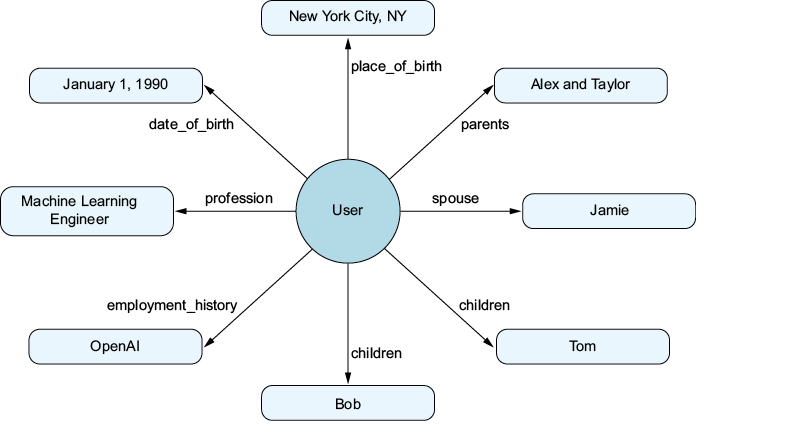
A structured memory graph represents attributes, preferences, and relationships linked to a persistent user identity. section 10.4






