A phased delivery strategy develops an automation through small, useful stages rather than waiting for a complete end-to-end solution. Each stage delivers benefits immediately, then becomes a base for later improvements. Start with the simplest workable result and extend it as skills, resources, and needs grow. section 1.3.2 section 2.0
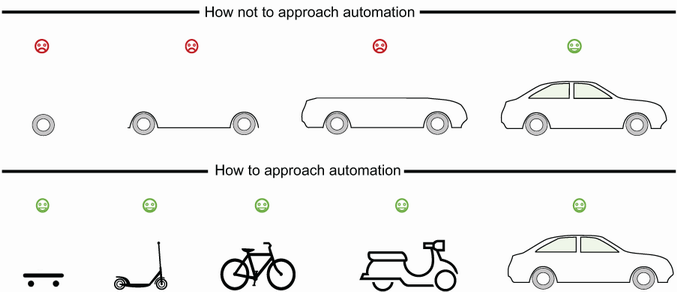
The skateboard-to-car progression illustrates how each phase improves capability while providing value before the final destination is reached. section 1.3.2
Use phases to make automation development more adaptable:
- Deliver a small first version that solves part of the problem instead of delaying value for a larger solution. section 1.3.2
- Create building blocks that can be reused across phases and refined as requirements become clearer. section 1.3.2 section 2.0
- Gather feedback after each phase and adjust the next phase before design choices create expensive rework. section 1.3.2
- Choose the simplest less error-prone implementation first, then add complexity only when later experience shows it is needed. section 2.1
Evolving a log-cleanup automation
A first phase can identify old log files, archive them, and remove the archived originals. Later phases can strengthen parameter handling, produce a unique timestamped archive on every run, or copy completed archives to cloud storage. Creating a new archive per execution limits the impact of failures and avoids repeatedly copying an archive that continues to grow. section 2.1 section 1.2
Plan each phase around the automation’s goal, trigger, actions, and maintainability. Automating only valuable portions of a process can produce a positive return even when full automation is not worthwhile. section 1.2


