Automation
Automation is the execution of tasks or processes by machines or software with reduced direct human intervention.

"Looks Good to Me"
Automation is the execution of tasks by software, machines, or other systems with reduced or no direct human intervention.
- How it is used
- Improves code review by removing tedious, objective work and preserving human attention for nuanced decisions.
- How deep it goes
- Explains candidates, prerequisites, team effects, and human limits, but stops short of detailed tool configuration.
- Examples
- Uses Selenium functional testing, style rules, pull-request validators, CODEOWNERS assignments, quality gates, and review reminders.
- What you can do after
- Apply it via testing, validation, quality gates, reviewer assignment, and reminders while retaining human review for context-dependent decisions.
Architecting for Autonomy
The execution of predefined process steps and decisions by software, with behavior specified by rules and predictable for given inputs and system state.
- How it is used
- Frames automation as the reliable execution baseline against which to decide when runtime autonomy is warranted.
- How deep it goes
- Defines deterministic behavior, outlines implementation steps and exception handling, and compares selection criteria without supplying an implementation.
- Examples
- Uses payment-data copying, discount rules, monthly statements, and a fraud alert workflow to illustrate automation.
- What you can do after
- Evaluate when deterministic automation suits a workflow and when adaptive decision-making may justify additional governance and risk.

Inside AI
Automation is the execution of tasks or processes by systems with reduced direct human intervention.
- How it is used
- Uses automation to examine routine-work efficiency and the difficulty of replacing human jobs.
- How deep it goes
- Explains capabilities and limitations through real-world cases, without detailing how to implement an automated system.
- Examples
- Illustrates automation with factory metal punching, pizza production and delivery, and a historical knitting machine.
- What you can do after
- Evaluate automation prospects by distinguishing repetitive task performance from the demands of a whole occupation.
Practical Automation with PowerShell: Effective scripting from the console to the cloud
Automation is the execution of tasks by software with reduced manual intervention, especially for repeatable operational work.
- How it is used
- Reduces repeatable IT operational work while guiding tool choice, task selection, and maintainable delivery.
- How deep it goes
- Explains cost evaluation, triggers, reusable components, phased delivery, adaptability, and restartability through operational scenarios.
- Examples
- Uses file-share monitoring, scheduled cleanup, server configuration, account provisioning, and zero-touch Windows ISO deployment.
- What you can do after
- Build reusable, phased PowerShell automations with appropriate triggers, configuration data, error handling, and restartable workflows.

The Art of AI Product Development
Automation is the use of software or machines to perform tasks with reduced direct human intervention.
- How it is used
- Guides AI product teams in choosing tasks and balancing human control with automation.
- How deep it goes
- Defines three degrees of automation and gives opportunity-assessment criteria and value calculations, without implementation detail.
- Examples
- Uses call-center request routing and sustainability-report composition to illustrate automation choices.
- What you can do after
- Evaluate automation opportunities using value, feasibility, and desirability, and quantify time savings for stakeholders.
Read how The Art of AI Product Development explains automation →
AI for Everyday IT
Automation is the execution of tasks or processes by systems with reduced direct human effort.
- How it is used
- Uses AI to speed routine IT work and integrate automated processing into business workflows.
- How deep it goes
- Walks through workflow design, testing, refinement, and deployment, alongside prompts for generating systems engineering scripts.
- Examples
- Illustrates automation with server scripts, a network configuration prompt, and an HR data-cleanup workflow.
- What you can do after
- Apply it via AI-assisted scripts and workflow tools, then test results and check security controls.
Effective Behavior-Driven Development
Automation is the behavior-driven development practice of making specified scenarios executable so that software behavior can be checked automatically.
- How it is used
- Turns agreed, business-readable scenarios into tests that guide implementation and check documented behavior as software changes.
- How deep it goes
- Explains the sequence and collaboration behind automation, while stopping short of framework-specific code or step implementations.
- Examples
- Contrasts brittle text-box and button-click steps with business-readable scenarios, and applies the workflow to changes in an existing codebase.
- What you can do after
- Practice/perform scenario-first development: automate an agreed scenario, implement until it passes, and retain it as a check on documented behavior.
Read how Effective Behavior-Driven Development explains automation →

Bootstrapping Microservices, Second Edition: With Docker, Kubernetes, GitHub Actions, and Terraform
The execution of operational or development tasks by software with reduced manual intervention.
- How it is used
- Uses automation to reduce manual deployment work and support manageable microservice projects.
- How deep it goes
- Builds workflows from a basic script to microservice deployment, while deferring advanced job dependencies and parallelism.
- Examples
- Uses a hello-world shell script and a video-streaming microservice deployment to demonstrate workflows.
- What you can do after
- Apply it via GitHub Actions to trigger workflows and deploy a microservice by pushing code.
Data-Driven Cybersecurity
Automation is the execution of tasks or responses by systems with minimal direct human intervention.
- How it is used
- Connects security data collection and analysis to faster alerts, reporting, incident management, and response.
- How deep it goes
- Describes integrated workflows and threshold-triggered actions, but does not provide an implementation procedure or code.
- Examples
- Uses scheduled scans and key rotations, automated incident escalations, and a 24-hour critical-patching target.
- What you can do after
- Apply it via tool integrations and thresholds to shorten response or patching time, then check results against stated targets.
The Complete Obsolete Guide to Generative AI
Automation is the execution of tasks or processes by software or machines with little or no manual intervention.
- How it is used
- Applies AI tools to streamline repetitive research, spreadsheet, messaging, task-management, and startup operations.
- How deep it goes
- Demonstrates concrete tool workflows and an API pipeline, while warning that larger scripts require substantial debugging.
- Examples
- Uses Form 10-K scoring and ranking, spreadsheet formulas, Slack bots, and Kanban workflow actions as examples.
- What you can do after
- Apply it via AI tools and APIs to automate recurring workflows while accounting for debugging, charges, and output errors.
Read how The Complete Obsolete Guide to Generative AI explains automation →

Effective Platform Engineering
Automation is the execution of tasks by software or machines with reduced need for direct human intervention.
- How it is used
- Applies automation to platform engineering, delivery workflows, infrastructure operations, and developer self-service.
- How deep it goes
- Explains operational uses, measurement, rollout, and outcomes, but stops short of implementation internals for individual automation systems.
- Examples
- Uses Python and Bash scripts, Jenkins, GitLab, Jira, GitHub Actions, CI/CD configurations, monitoring, and infrastructure provisioning as examples.
- What you can do after
- Apply automation to accelerate delivery, reduce manual errors, improve reliability, and free developers for higher-value work.
Read how Effective Platform Engineering explains automation →

Shipping Go: Develop, deliver, discuss, design, and go again
An automated process is a software or operational procedure executed by systems with limited or no manual intervention.
- How it is used
- Reduces manual work between committing code and delivering a product, leaving more time for customer-driven features.
- How deep it goes
- Illustrates repeatable setup and check-in-triggered feedback, but stops short of prescribing detailed pipeline configuration.
- Examples
- Uses a Go Makefile and README setup commands alongside pipeline feedback for compilation or quality failures.
- What you can do after
- Practice/perform it by scripting repeatable setup and using code-triggered checks to identify problems before delivery.
Read how Shipping Go: Develop, deliver, discuss, design, and go again explains automation →
Local Image Generation
Automation is the use of software to perform repetitive tasks with minimal manual intervention.
- How it is used
- Automates repeated Stable Diffusion image generation for multi-prompt work such as graphic-novel panels.
- How deep it goes
- Walks through configuration dictionaries and nested generation loops, without requiring every programming detail to be understood.
- Examples
- Uses five differently sized graphic-novel panels, ten generated candidates per prompt, output folders, and a fixed seed.
- What you can do after
- Apply it via Python and Diffusers to generate and save organized collections of configured Stable Diffusion images.
Build High Value Software Systems
The use of software or machines to perform tasks with reduced manual intervention.
- How it is used
- Uses automation to shorten defect-feedback loops and reduce waiting without turning validation into a bottleneck.
- How deep it goes
- Works through contract-versus-implementation tests and pipeline bottlenecks, but stops short of a full automation implementation.
- Examples
- Contrasts payment-rule tests with a gateway-client assertion and a build that grows from 12 to 42 minutes.
- What you can do after
- Practice/perform it by selecting checks that protect behavior and moving repeatable checklist steps into CI.
Read how Build High Value Software Systems explains automation →

Machine Learning Platform Engineering
Automation is the execution of workflow activities by systems rather than through repeated manual intervention.
- How it is used
- Structures ML experimentation, evaluation, training, deployment, and monitoring as repeatable workflows.
- How deep it goes
- Explains orchestration, reproducibility, evaluation, deployment, and observability, but stops short of specifying a complete implementation.
- Examples
- Uses orchestrated ML pipelines, automated holdout evaluation, CI/CD container deployment, pipeline dashboards, and model-output sanity tests.
- What you can do after
- Build repeatable ML workflows that evaluate models, expose metrics, reduce manual errors, and deploy changes consistently.
Read how Machine Learning Platform Engineering explains automation →
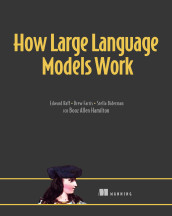
How Large Language Models Work
Automation is the use of technology to perform tasks or processes with reduced direct human labor.
- How it is used
- Frames automation as an economic and ethical question, especially when LLMs extend it from manual labor to knowledge work.
- How deep it goes
- Compares historical labor changes with LLM risks, but stops short of predicting automation’s eventual economic outcome.
- Examples
- Uses farming, mining, assembly work, copywriting, banking, and ATMs to illustrate different automation effects.
- What you can do after
- Evaluate automation claims without assuming that task replacement directly predicts job loss or social benefit.
Read how How Large Language Models Work explains automation →

Introduction to Generative AI, Second Edition
Automation is the use of technology to perform tasks or processes with reduced direct human labor.
- How it is used
- Frames automation as a labor-market force that changes productivity, occupations, and the distribution of human work.
- How deep it goes
- Explains affected tasks, adoption delays, worker displacement, and adaptation needs without detailing implementation mechanisms.
- Examples
- Uses customer support, content moderation, administrative work, marketing, legal research, and software development as affected work.
- What you can do after
- Evaluate how generative AI may alter tasks, productivity, employment, and retraining needs while distinguishing forecasts from established effects.
Read how Introduction to Generative AI, Second Edition explains automation →

100 SQL Server Mistakes and How to Avoid Them
Automation is the execution of operational or administrative tasks by software with limited manual intervention.
- How it is used
- Uses automation to manage recurring SQL Server maintenance and reduce dependence on manual DBA effort.
- How deep it goes
- Explains operational benefits and failure modes through a maintenance scenario, but does not provide implementation scripts.
- Examples
- Uses MagicChoc, corporate backup tools, index rebuilds, statistics updates, consistency checks, and per-instance Agent jobs.
- What you can do after
- Apply it via automated maintenance to reduce repetitive work and redirect DBA time toward performance investigation.
Read how 100 SQL Server Mistakes and How to Avoid Them explains automation →
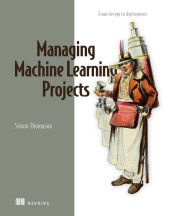
Delivering Machine Learning Projects: From design to deployment
Automation is the execution of processes by software or machines with reduced manual intervention.
- How it is used
- Uses automation to structure ML testing, CI/CD promotion, post-release verification, and operational handoffs.
- How deep it goes
- Develops concrete testing and release tasks but stops short of algorithmic implementation or detailed pipeline configuration.
- Examples
- Uses test-design tickets, reproducible test environments, Jenkins pipelines, automated post-release plans, and deployment contingency procedures.
- What you can do after
- Operate reproducible model tests and automated production promotions with verified results and prepared intervention paths.
Read how Delivering Machine Learning Projects: From design to deployment explains automation →

Lead Developer Career Guide
The technique of having software perform tasks or workflows automatically according to defined triggers or rules.
- How it is used
- Streamlines the SDLC by automating repetitive work, deployment tracking, reporting, testing, backups, and recovery.
- How deep it goes
- Identifies candidate tasks, names implementation tools, and describes deployment triggers, but stops short of implementation detail.
- Examples
- Uses Jenkins, Selenium, Jira, GitHub, Trello, Azure DevOps, Slack, and Microsoft Teams for practical workflow examples.
- What you can do after
- Apply it via SDLC tools to reduce errors, accelerate releases, update project status, and improve productivity and reporting.

Deep Learning with R, Third Edition
Automation is the execution of tasks by systems according to predefined training, rules, or programs rather than autonomous adaptation.
- How it is used
- Frames automation as the practical encoding and operation of human skills for narrowly defined problems.
- How deep it goes
- Defines automation and contrasts its failure on novelty with intelligence, without detailing implementation mechanisms.
- Examples
- Uses lookup tables, dictionaries, hardcoded if-else programs, deep networks, and the cartoon-versus-living-being analogy.
- What you can do after
- Evaluate/understand whether a system is responding within trained or programmed cases rather than adapting to unfamiliar situations.
Read how Deep Learning with R, Third Edition explains automation →

Amazon Web Services in Action, Third Edition: An in-depth guide to AWS
Automation is the execution of operational or provisioning tasks by software rather than manually by a person.
- How it is used
- Automates AWS provisioning, infrastructure management, deployments, testing, and environment cleanup.
- How deep it goes
- Explains benefits and workflows with AWS examples, but defers detailed CLI configuration and infrastructure-as-code implementation.
- Examples
- Uses WordPress stacks, virtual machines, databases, networks, CloudFormation deletion, CLI scripting, and isolated deployment environments.
- What you can do after
- Build and remove AWS environments on demand, script recurring operations, and structure automated build, test, deployment, and monitoring workflows.
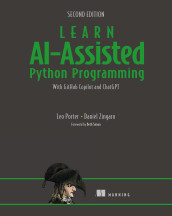
Learn AI-Assisted Python Programming, Second Edition
Automation is the technique of having software perform repetitive or otherwise routine work with limited human effort.
- How it is used
- Automates repetitive work by turning tedious tasks into reusable, time-saving tools.
- How deep it goes
- Explains motivation and applications, then identifies supporting Python modules without detailing their implementations.
- Examples
- Uses report merging, photo archiving, duplicate removal, customized email, grade collation, and forwarded-email cleanup.
- What you can do after
- Build small programs that automate repetitive jobs and select suitable Python modules with Copilot Chat.
Read how Learn AI-Assisted Python Programming, Second Edition explains automation →
Also covered in
- Azure Security
- Designing Deep Learning Systems: A guide for software engineers
- Infrastructure as Code, Patterns and Practices: With examples in Python and Terraform
- Claude at WorkIn early access (MEAP)
- Google Anthos in Action
- The Cloud at Your Service: The when, how, and why of enterprise cloud computing
- Developer Experience on KubernetesIn early access (MEAP)
- AI Agents for Offensive SecurityIn early access (MEAP)
- gRPC Microservices in Go
- Statistics Every Programmer Needs
- Digital Twins in Action
- API Design Patterns
What to know first
- language modelA language model is a computational model that represents patterns in linguistic sequences to assign probabilities, predict, generate, or evaluate language.
- artificial intelligenceArtificial intelligence is the field of computing concerned with creating systems that perform tasks associated with intelligence, such as learning, reasoning, perception, and decision-making.
- deployment pipelineA deployment pipeline is a repeatable sequence of stages that builds, tests or validates, packages, and delivers software changes toward release or deployment.
- contractA contract is an agreed specification of the conditions, expectations, rights, or obligations that govern behavior or interactions between parties or software components.
Related concepts
- behavior-driven developmentpart of · Behavior-driven development is a collaborative software development practice that specifies and verifies desired behavior through examples expressed in terms understandable to stakeholders.
- private cloudused by · A private cloud is a cloud computing environment dedicated to the use of a single organization and its authorized consumers.
- wasteaddresses · Waste is activity or resource consumption that does not contribute useful value to an intended product, process, customer, or organizational outcome.
- deployment pipelineused by · A deployment pipeline is a repeatable sequence of stages that builds, tests or validates, packages, and delivers software changes toward release or deployment.
- human-in-the-loopcontrasts with · Human-in-the-loop is a system or workflow design in which people participate in reviewing, guiding, correcting, or authorizing an automated process.
Questions about automation
What is automation?
Automation is the execution of tasks or processes by machines or software with reduced direct human intervention.
Which Manning books explain automation?
"Looks Good to Me", Architecting for Autonomy, Inside AI, Practical Automation with PowerShell: Effective scripting from the console to the cloud, The Art of AI Product Development, AI for Everyday IT, Effective Behavior-Driven Development, Bootstrapping Microservices, Second Edition: With Docker, Kubernetes, GitHub Actions, and Terraform and 15 more.
What should I know before learning automation?
Manning books that teach automation usually introduce language model, artificial intelligence, deployment pipeline and contract first.
What is the difference between automation and human-in-the-loop?
Automation is the execution of tasks or processes by machines or software with reduced direct human intervention. Human-in-the-loop is a system or workflow design in which people participate in reviewing, guiding, correcting, or authorizing an automated process.
What kinds of automation are there?
Kinds of automation include robotic process automation.
What is automation part of?
Automation is part of behavior-driven development. Behavior-driven development is a collaborative software development practice that specifies and verifies desired behavior through examples expressed in terms understandable to stakeholders.
These guides are generated from the text of Manning books by Manning's knowledge graph and link to the sections they draw on. The full books are available on liveBook and at manning.com.