Automation executes operational and provisioning tasks through software instead of manual work. Because AWS is API-driven, code can create networks, start virtual-machine clusters, deploy databases, and resolve their dependencies. Infrastructure as code lets you describe the desired system while software builds it, improving reliability and efficiency. section 1.3.3
Automating infrastructure provides several practical benefits:
- Reuse scripts and blueprints to build environments quickly and repeat recurring tasks. section 4.1.1
- Use executable definitions as detailed documentation that coworkers can reproduce when responsibilities change. section 4.1.1
- Create isolated systems for code changes, then build, test, deploy, and monitor them through an automated delivery process. section 4.1
On-demand WordPress infrastructure
A WordPress environment can combine virtual machines, a load balancer, a MySQL database, and a network filesystem. AWS CloudFormation can create the complete stack when needed and delete it afterward. Deleting the stack also removes its dependencies, so evaluation infrastructure can be shut down rather than left running and accruing charges. section 2.4 section 2.5
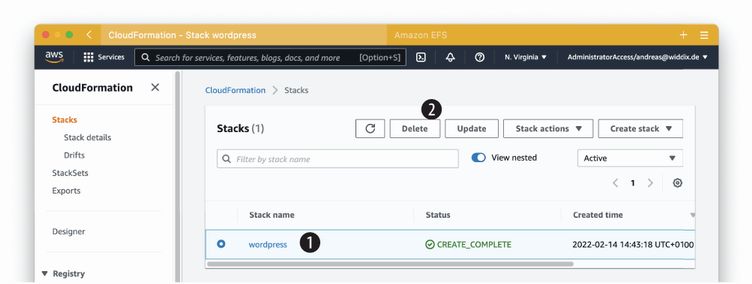
Inspect the CloudFormation action used to delete the blogging infrastructure. section 2.4
The AWS CLI is one way to script AWS operations, alongside blueprints such as CloudFormation. Automation supports frequent deployments, but the resulting systems still require monitoring and log analysis to verify that changes succeeded. section 4.1 section 4.1.1


















