liveBook · Manning

Physical model

As explained in Hacking Cryptography

A physical model relates measurable system behavior to the physical properties of the phenomenon producing it.

A physical model connects a TRNG’s measurable behavior to the physical phenomenon it samples. It estimates generation rate and entropy from changing physical conditions, but does not predict the actual output bits. section 2.2.1

For a trustworthy TRNG, the model should:

  • Relate output speed to how often the sampled physical conditions change; rain, for example, cannot provide meaningfully new conditions every millisecond. section 2.2.1
  • Quantify expected entropy and generation rate, then trigger a shutdown when health checks indicate faulty operation. section 2.2.1
  • Resist attackers who can physically control the device by using protections such as tamper-proofing. section 2.2.1
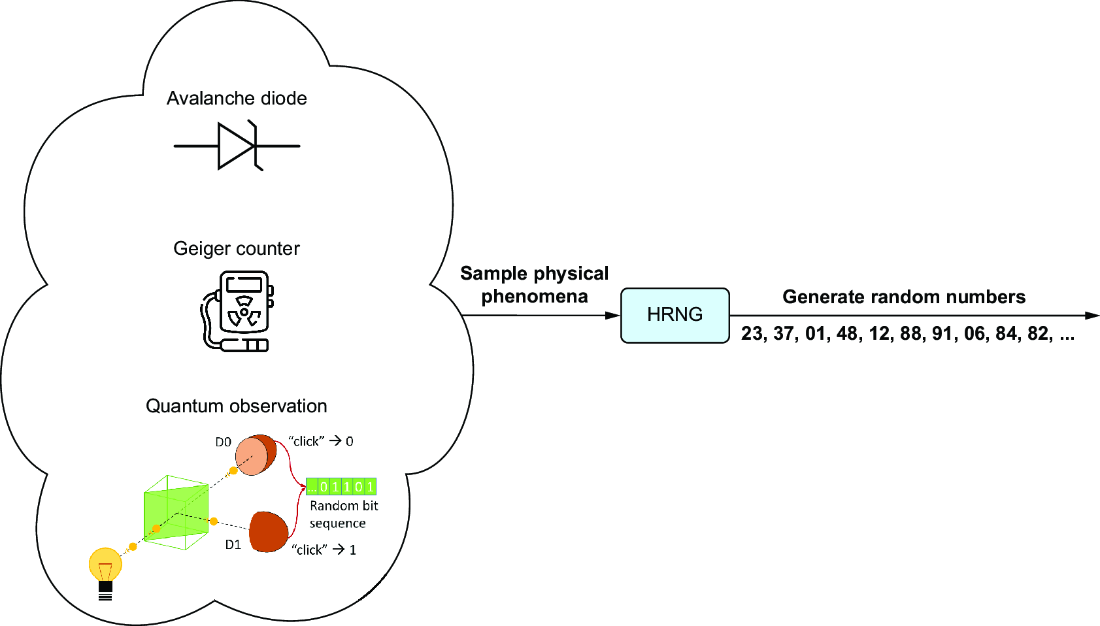
Figure 2.4 TRNGs sample physical phenomena to generate random numbers.
figure

Diagram showing how TRNGs sample physical phenomena to produce random numbers. section 2.2.1

How Hacking Cryptography covers it

How deep it goes
Explains rate and entropy estimation from physical properties, while stopping short of predicting individual output bits.
Examples
Uses rain and radioactive decay to illustrate changing physical conditions and measurable randomness.
What you can do after
Evaluate TRNG operation by checking whether its entropy and generation rate meet expectations.
How it connects
Connects TRNGs with entropy, physical phenomena, health checks, and tamper protection.

Also explained in

Compare how 2 books explain physical model →

Related concepts

This explainer was generated by Manning's knowledge graph from the text of Hacking Cryptography. The section links point to the parts of the book it draws on.