liveBook · Manning

Pod

As explained in Google Anthos in Action

A pod is the smallest deployable unit in Kubernetes, grouping one or more containers with shared networking and storage.

A pod is the smallest unit Kubernetes can deploy and manage. It contains one or more containers that run together. Containers in the same pod share a networking stack, so they can communicate through localhost or 127.0.0.1. They can also access volumes mounted to the pod. section 3.2.6 section 15.8

A pod receives an IP address when it is created, but that address is ephemeral. Do not configure clients to target it: replacement may change the address. Target a service name instead; the service uses endpoints to direct traffic to the pod running the application. section 3.2.6

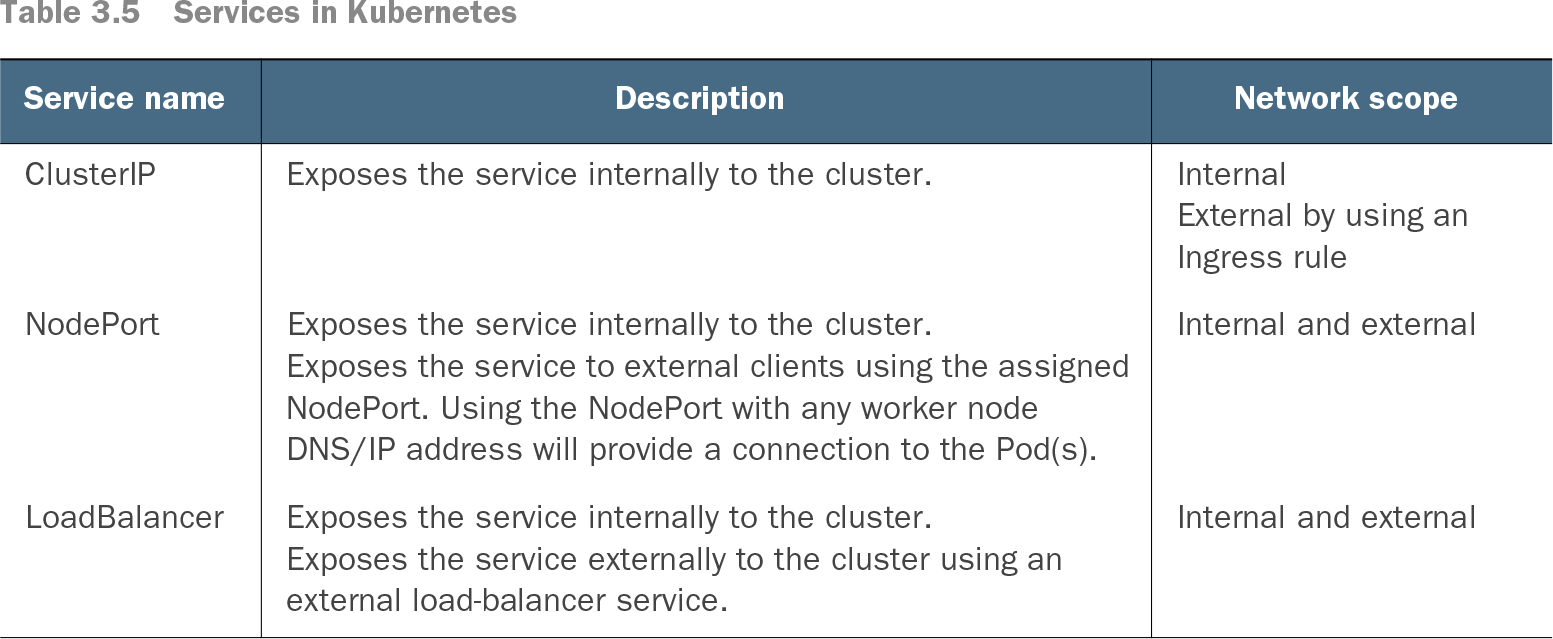
Table 3.5 Services in Kubernetes (view table figure)

Service name

Description

Network scope

ClusterIP

Exposes the service internally to the cluster.

InternalExternal by using an Ingress rule

NodePort

Exposes the service internally to the cluster.Exposes the service to external clients using the assigned NodePort. Using the NodePort with any worker node DNS/IP address will provide a connection to the Pod(s).

Internal and external

LoadBalancer

Exposes the service internally to the cluster.Exposes the service externally to the cluster using an external load-balancer service.

Internal and external

Compare ClusterIP, NodePort, and LoadBalancer services when choosing how clients should reach an application running in pods. section 3.2.6


How Google Anthos in Action covers it

How deep it goes
Defines shared networking, mounted-volume access, and ephemeral addressing, but gives no pod creation procedure.
Examples
Uses localhost and 127.0.0.1 for communication between containers in one pod.
What it assumes
Builds on containers and namespaces while defining the pod without requiring a deployment manifest.
What you can do after
Evaluate/understand pod networking and avoid targeting an ephemeral pod IP when configuring application access.
How it connects
Connects pods to containers, volumes, services, and endpoints.

Also explained in

Compare how 15 books explain pod →

Related concepts

This explainer was generated by Manning's knowledge graph from the text of Google Anthos in Action. The section links point to the parts of the book it draws on.