Problem definition specifies the predictive task, success criteria, constraints, and whether machine learning is appropriate. It anchors every later stage, from data acquisition through evaluation and deployment. section 3.0
In ligand-based virtual screening, the task is to identify promising compounds that may block the human hERG potassium channel, an antitarget associated with drug-induced cardiotoxicity. The model predicts either hERG non-blocker (0) or hERG blocker (1); a non-blocker prediction does not establish safety. section 3.1
A useful definition makes the following decisions explicit:
- State the input compounds, target label, intended use case, regulatory or timeline constraints, and business goal. section 3.1
- Distinguish important errors: missing a blocker can create clinical cost and reputational damage, while a false alarm can remove a valuable candidate. section 3.1
- Separate uncertainty from classification so low-confidence compounds can receive experimental follow-up instead of confident labels. section 3.1
- Reassess the business objective after evaluation and reconsider project scope or alternatives if the model does not meet it. section 3.0 section 3.5
Figure 3.1 Key stages in our ML workflow.
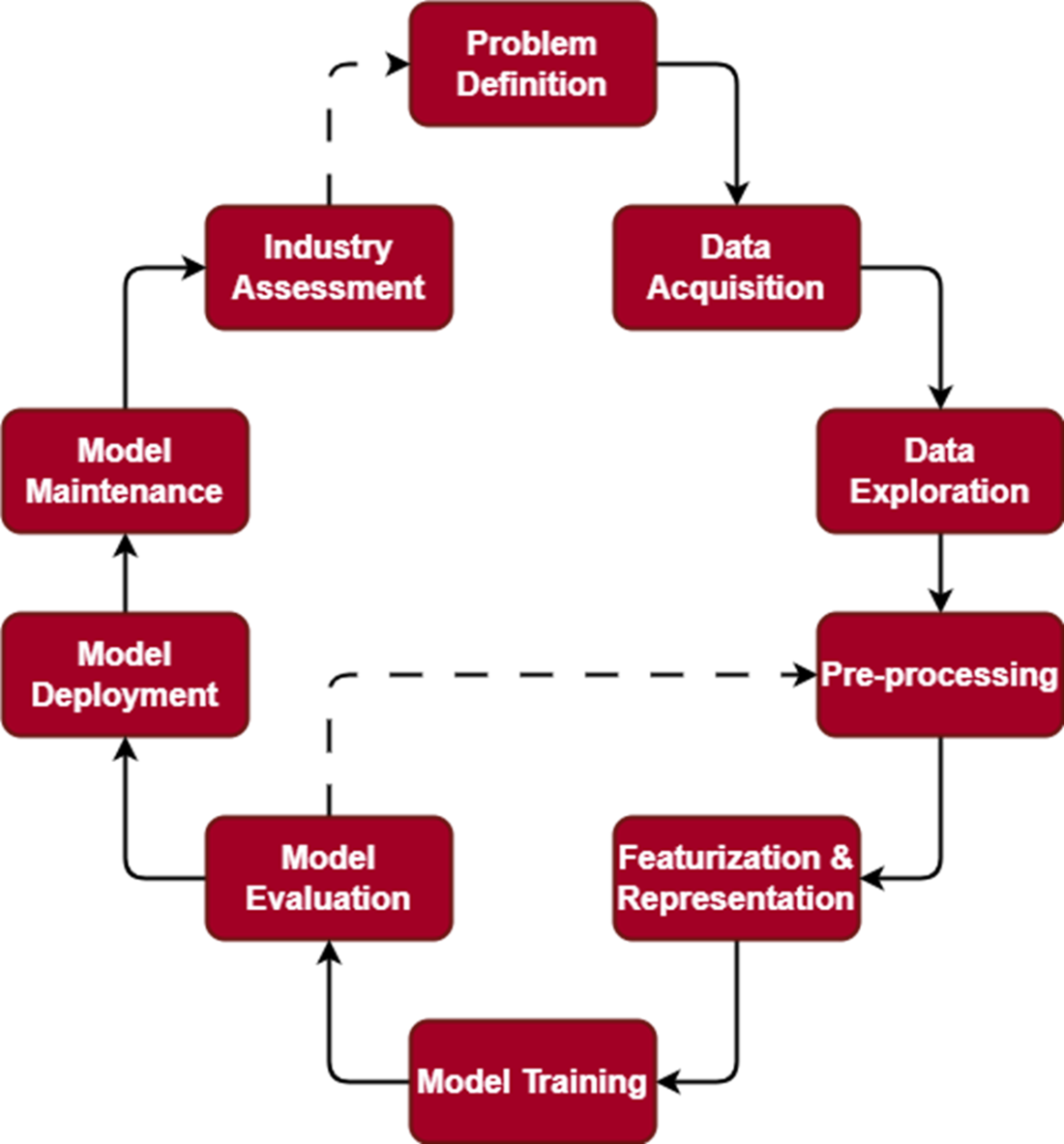
Use the workflow overview to place problem definition before data acquisition, exploration, preprocessing, featurization, training, evaluation, deployment, and maintenance. section 3.0







