Framing
Problem framing is the process of defining or recasting a problem and its context to shape how it is interpreted, analyzed, or addressed.
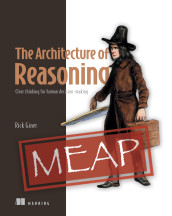
The Architecture of Reasoning
The way a problem is defined, which privileges some interpretations or solutions over others.
- How it is used
- Defines which problems, options, and priorities a team considers before reaching a decision.
- How deep it goes
- Explains framing through decision failures and perspective rotation, then offers brief conversational interventions rather than a formal procedure.
- Examples
- Uses a rewrite-or-refactor review, a premature billing-system request, and a platform-consolidation decision to expose restrictive frames.
- What you can do after
- Practice/perform it by questioning an opening definition, making priorities explicit, and rotating perspectives before committing.
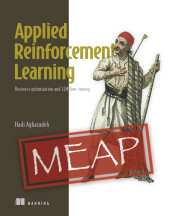
Applied Reinforcement Learning
The process of identifying and defining a problem, its relevant decisions, and whether a particular approach is warranted.
- How it is used
- Determines whether a problem warrants reinforcement learning before system design begins.
- How deep it goes
- Defines four suitability conditions but does not detail a step-by-step framing procedure.
- What you can do after
- Evaluate whether a problem merits reinforcement learning by checking four conditions: sequential decisions, delayed feedback, randomness, and learning over time.
Also covered in
- Decision EngineeringIn early access (MEAP)
- Lead Developer Career Guide
- Deep Learning with Python, Third Edition
What to know first
- large language modelA large language model is a machine-learning model trained on extensive text data to process and generate natural language.
Related concepts
- decision lifecyclepart of · A model of decision-making as a set of recurring activities that move from clarifying a problem through evaluating options to carrying out a choice.
- prompt structurepart of · Prompt structure is the organization of a prompt’s content and instructions to guide a model’s response or generation.
- search spaceproduces · A search space is the set of possible states, choices, configurations, or candidate solutions that may be considered when exploring or solving a problem.
- contexthas part · Context is the relevant information, state, or circumstances surrounding an input, decision, or activity that influence its interpretation or behavior.
Questions about framing
What is framing?
Problem framing is the process of defining or recasting a problem and its context to shape how it is interpreted, analyzed, or addressed.
Which Manning books explain framing?
The Architecture of Reasoning and Applied Reinforcement Learning.
What should I know before learning framing?
Manning books that teach framing usually introduce large language model first.
What is framing part of?
Framing is part of decision lifecycle. A model of decision-making as a set of recurring activities that move from clarifying a problem through evaluating options to carrying out a choice.
What are the parts of framing?
Framing includes context.
What is framing also called?
Framing is also called reframing.
These guides are generated from the text of Manning books by Manning's knowledge graph and link to the sections they draw on. The full books are available on liveBook and at manning.com.