A producer creates and emits an event, then gets back to work. It does not need to know which consumers are listening—or whether any are listening at all. In a typical event-driven flow, it sends the event to a broker rather than directly to a consumer. section 7.2.1 section 7.9
An order announcement
An Order API can publish “Order Placed” and move on. A shipping service might use that event to print a label; other services can react without the Order API needing to call them directly. section 7.2.1 section 7.2.3
Figure 7.3 The Broker acts as the buffer. The Producer speaks to the Broker, not the Consumer.
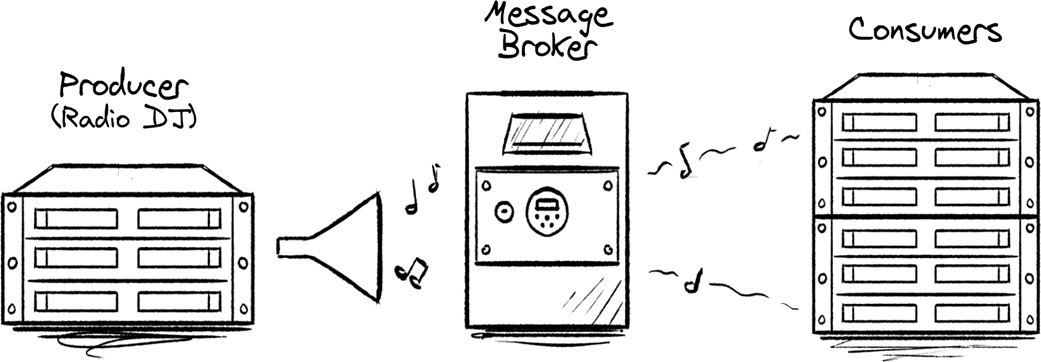
The diagram shows the broker between producer and consumer: the producer speaks to the broker, not directly to the consumer. section 7.2.1
A quick response, with a delayed result
In a simulated comment-analysis pipeline, the producer puts a CommentPosted event in a channel and immediately reports “Comment Received (HTTP 200).” An AI-agent consumer processes it later, after a simulated three-second delay. The shared CorrelationId helps connect the two logs. section 7.7.1 section 7.7.2









