A business purpose answers the basic question: why does this organization exist, and what objective should guide its work? In planning, purpose turns market understanding into a direction for the company. section 17.2.4
Use purpose as the bridge between understanding a market and deciding what the organization will do.
- Define the purpose and objectives after identifying target market segments and before designing the whole product. section 17.2.4
- Communicate the purpose repeatedly, explain how each person contributes, and clarify changes when strategy shifts. section 22.3.2
- Feed market feedback back into the purpose and objectives so they continue tracking changed assumptions. section 17.2.4
A practical alignment check
During weekly all-hands meetings, explain the company’s purpose and strategy, then connect each team’s contribution to the overall objectives. Reinforce the message in everyday conversations, not only formal meetings. section 22.3.2
Figure 17.1 Pictorial representation of the 10 steps in the creation of a business strategy/plan. (Step 11 is not part of the plan; it is the actions the plan dictates for the first year of operations.) Note that the order in which the steps are taken during plan development is not the same as the order in which they are presented in a document. The numbering shown here is in the order in which the steps are taken in the plan development process.
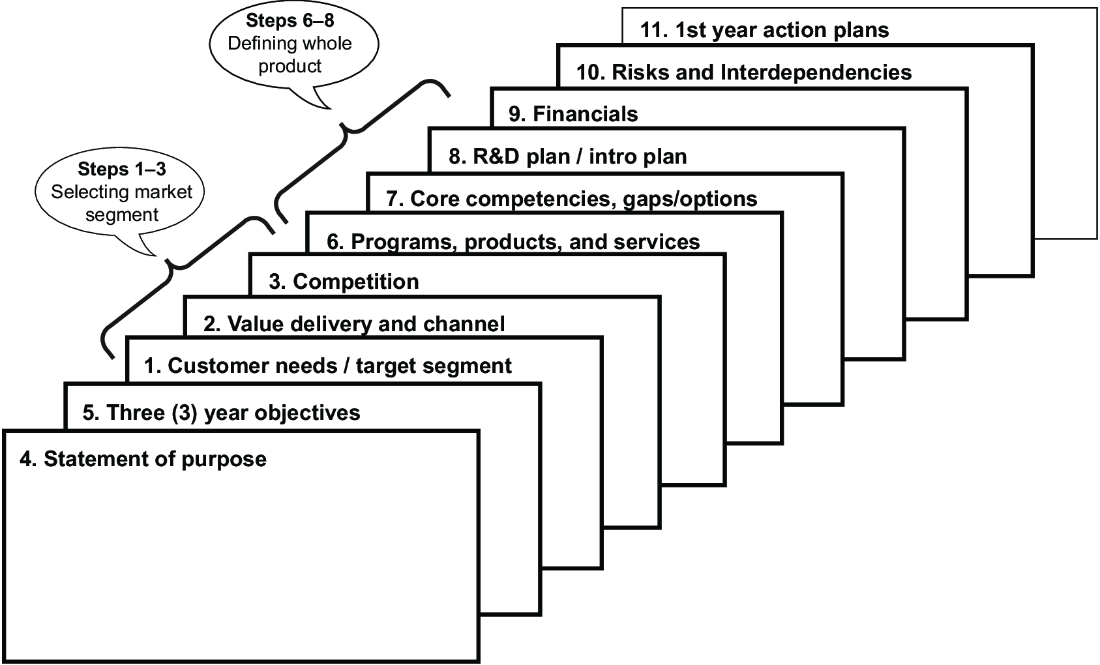
Use the visual sequence to see where business purpose sits: after market segments and before whole product, financial returns, risks, and validation. section 17.2.4

