Pytest
pytest is a Python testing framework for discovering, writing, and running automated tests.
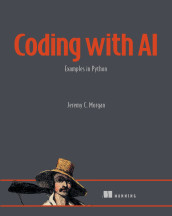
Coding with AI
pytest is a Python testing framework that supports concise test writing, test discovery, fixtures, and extensible execution.
- How it is used
- Uses pytest to build Python tests with generative AI and compare assistants’ output.
- How deep it goes
- Demonstrates installation, discovery naming, assertions, and fixture setup and teardown, without explaining pytest internals.
- Examples
- Shows question-model tests, a database connection fixture, and an empty-table test generated with Tabnine.
- What you can do after
- Applies pytest to run and review AI-generated tests using assertions and a database fixture.
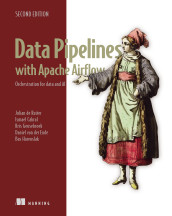
Data Pipelines with Apache Airflow, Second Edition
pytest is a Python testing framework that discovers and runs tests and provides fixtures and extensibility mechanisms.
- How it is used
- Runs pre-deployment tests for Airflow DAG integrity and individual operator behavior.
- How deep it goes
- Works through installation, discovery, commands, parameterization, direct operator execution, and mocking; does not cover pytest internals.
- Examples
- Uses a cyclic DAG integrity test, a BashOperator assertion, and a mocked connection lookup.
- What you can do after
- Apply it via pytest to discover tests, catch DAG loading errors, and validate operator behavior without a live Airflow system.
Read how Data Pipelines with Apache Airflow, Second Edition explains pytest →

Build Python Web Apps with Streamlit
pytest is a Python testing framework for writing and running tests with concise test functions, assertions, fixtures, and plugins.
- How it is used
- Uses pytest to automate checks on a Streamlit application's frontend and backend as part of a broader testing strategy.
- How deep it goes
- Works through test discovery, assertions, fixtures, mocking, verbose execution, and failure diagnosis in concrete examples.
- Examples
- Tests addition, mocked movie searches, poster URLs, and a frontend movie-rating display.
- What you can do after
- Apply pytest to write and run automated tests, reuse fixture setup, mock dependencies, and investigate assertion failures.
Read how Build Python Web Apps with Streamlit explains pytest →
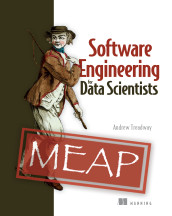
Software Engineering for Data Scientists
PyTest is a Python testing framework that discovers and runs tests with concise test-writing conventions and extensible functionality.
- How it is used
- Runs automated Python tests for model predictions and data-pipeline behavior from the terminal.
- How deep it goes
- Demonstrates installation, test naming, assertions, expected exceptions, whole-file runs, name filters, and markers without covering broader pytest functionality.
- Examples
- Uses customer-churn model predictions, CSV input rows, missing configuration keys, nonexistent files, -k filtering, and a fetch_predictions marker.
- What you can do after
- Apply it via pytest to write and selectively run concise tests for a Python prediction pipeline.
Read how Software Engineering for Data Scientists explains pytest →
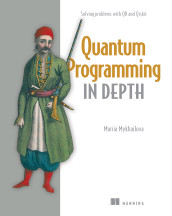
Quantum Programming in Depth
pytest is a Python testing framework for discovering, organizing, and running automated tests.
- How it is used
- Runs automated tests for Qiskit, Q#, simulator state preparation, and quantum measurement behavior.
- How deep it goes
- Explains discovery, parametrization, simulator integration, state extraction, and assertions, but does not detail pytest internals.
- Examples
- Uses parametrized two-qubit state-preparation tests and randomized basis-state measurement tests.
- What you can do after
- Apply it via pytest to validate quantum amplitudes, Q# simulator states, and deterministic measurement results.
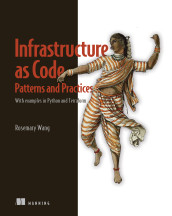
Infrastructure as Code, Patterns and Practices: With examples in Python and Terraform
pytest is a Python testing framework that discovers and runs tests using naming conventions and assertion-based test functions.
- How it is used
- Runs selective unit tests for generated infrastructure configuration and custom security or compliance checks.
- How deep it goes
- Defines discovery, fixtures, assertions, and command-line execution, while deferring exhaustive infrastructure coverage and complete policy-tool support.
- Examples
- Uses network factories, subnet and IP-range assertions, reusable fixtures, and a pytest command reporting three passing tests.
- What you can do after
- Apply it via test files, fixtures, and assertions to verify generated infrastructure objects and selected policy values.

Secure APIs
pytest is a Python testing framework for discovering and running tests with assertions, fixtures, and extensible plugins.
- How it is used
- Runs repeatable API security checks for authentication, object authorization, and role-based access control.
- How deep it goes
- Demonstrates test setup, requests, assertions, installation, execution, and focused selection, but not pytest internals.
- Examples
- Uses unauthenticated course requests, cross-student registration requests, administrator endpoints, and focused pytest commands.
- What you can do after
- Diagnose unauthorized access and privilege-escalation flaws by writing, running, and filtering API security tests.

Build Financial Software with Generative AI (From Scratch)
pytest is a Python testing framework for writing and running automated tests.
- How it is used
- Uses small automated tests to validate file parsing, generated code, and API behavior during rapid development cycles.
- How deep it goes
- Builds from file-reading checks to record parsing and HTTP assertions, while deferring broader testing categories and deeper application behavior.
- Examples
- Demonstrates ACH-file parsing checks and a GET /files test that verifies status code 200 and a hardcoded JSON response.
- What you can do after
- Apply it via pytest and TestClient to validate parsing logic and API responses, including tests designed to fail when expectations are wrong.
Read how Build Financial Software with Generative AI (From Scratch) explains pytest →
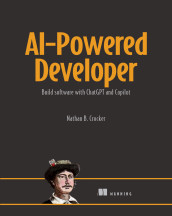
AI-Powered Developer: Build software with ChatGPT and Copilot
pytest is a Python testing framework supporting unit, functional, and integration tests with concise test syntax and extensible features.
- How it is used
- Supports unit, functional, and integration testing in Python projects.
- How deep it goes
- Explains core advantages and features, but does not descend into pytest-specific implementation details.
- Examples
- Uses simple and complex unit cases plus functional and integration tests as testing contexts.
- What you can do after
- Apply it to write concise tests and run broader test suites with fixtures and parameterization.
Read how AI-Powered Developer: Build software with ChatGPT and Copilot explains pytest →
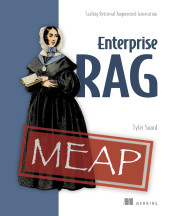
Enterprise RAG
pytest is a Python testing framework for discovering and running tests and reporting their results.
- How it is used
- Runs automated RAG evaluations locally and in continuous integration.
- How deep it goes
- Demonstrates test-case construction, answer assertions, dependency installation, and CI execution without testing internals.
- Examples
- Uses fictional questions, generated answers, PASS/FAIL evaluation, test_automated_evals.py, and a GitHub Actions workflow.
- What you can do after
- Operate pytest to validate RAG answers locally and automatically in GitHub Actions.
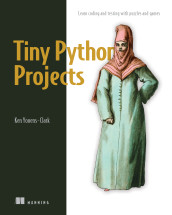
Tiny Python Projects: Learn coding and testing with puzzles and games
pytest is a Python testing framework that discovers and runs tests and reports their results.
- How it is used
- Runs Python tests frequently to verify behavior during implementation and refactoring.
- How deep it goes
- Demonstrates command flags, pass/fail output, and integration versus unit tests without discussing pytest internals.
- Examples
- Uses hello.py and a bottles-of-beer program, with test.py, terminal listings, assertions, and Makefile shortcuts.
- What you can do after
- Diagnose failing assertions, verify complete programs, and safely compare alternative implementations.
Read how Tiny Python Projects: Learn coding and testing with puzzles and games explains pytest →

Machine Learning Platform Engineering
pytest is a Python testing framework for writing and running automated tests.
- How it is used
- Runs application unit tests as the test-stage gate before container builds and Helm chart updates.
- How deep it goes
- Shows executable CI configuration and failure behavior, but does not detail test design or pytest internals.
- Examples
- Uses test_main.py, requirements.txt, and a pytest command targeting the project directory.
- What you can do after
- Apply pytest through GitLab CI to validate code and block downstream delivery stages when tests fail.
Read how Machine Learning Platform Engineering explains pytest →
Practices of the Python Pro
pytest is a Python testing framework that discovers and runs tests and provides features for assertions, fixtures, and test configuration.
- How it is used
- Supports readable unit and integration tests that can be rerun as an application gains features or changes.
- How deep it goes
- Explains assertions, discovery, organization, output, and unittest conversion, while deferring pytest’s broader feature set.
- Examples
- Uses Product SKU tests, assert comparisons, automatic discovery, and a command-line session reporting fifteen passing tests.
- What you can do after
- Apply pytest by organizing test classes, writing assert-based tests, running pytest, and converting unittest tests incrementally.
Also covered in
- Claude at WorkIn early access (MEAP)
- The Well-Grounded Python Developer: How the pros use Python and Flask
- Refactoring to Rust
- Learn AI-Assisted Python Programming, Second Edition
What to know first
- software testingSoftware testing is the systematic evaluation of software under specified inputs or conditions to assess its behavior against expected results or requirements and identify defects.
- PythonPython is a high-level, general-purpose, dynamically typed programming language with readable syntax and support for multiple programming paradigms.
- assertionA software assertion is an executable check of an expected condition or property that signals failure when the check does not hold.
- language modelA language model is a computational model that represents patterns in linguistic sequences to assign probabilities, predict, generate, or evaluate language.
Related concepts
- unittestalternative to · unittest is Python’s standard-library framework for defining, organizing, executing, and reporting automated tests.
- software testinguses · Software testing is the systematic evaluation of software under specified inputs or conditions to assess its behavior against expected results or requirements and identify defects.
- Pythonuses · Python is a high-level, general-purpose, dynamically typed programming language with readable syntax and support for multiple programming paradigms.
- testing frameworkkind of · A testing framework is software infrastructure that provides conventions and facilities for defining, organizing, executing, and evaluating tests.
- test fixtureuses · A test fixture is prepared data, state, resources, or setup that establishes controlled conditions for one or more tests, sometimes including cleanup.
Questions about pytest
What is pytest?
pytest is a Python testing framework for discovering, writing, and running automated tests.
Which Manning books explain pytest?
Coding with AI, Data Pipelines with Apache Airflow, Second Edition, Build Python Web Apps with Streamlit, Software Engineering for Data Scientists, Quantum Programming in Depth, Infrastructure as Code, Patterns and Practices: With examples in Python and Terraform, Secure APIs, Build Financial Software with Generative AI (From Scratch) and 5 more.
What should I know before learning pytest?
Manning books that teach pytest usually introduce software testing, Python, assertion and language model first.
What is the difference between pytest and unittest?
pytest is a Python testing framework for discovering, writing, and running automated tests. unittest is Python’s standard-library framework for defining, organizing, executing, and reporting automated tests.
What is pytest a kind of?
Pytest is a kind of testing framework. A testing framework is software infrastructure that provides conventions and facilities for defining, organizing, executing, and evaluating tests.
These guides are generated from the text of Manning books by Manning's knowledge graph and link to the sections they draw on. The full books are available on liveBook and at manning.com.