A RACI matrix makes accountability explicit by assigning people to four roles for each task or component. It can help a team maintain focus, but using it too little—or too much—can undermine performance and sustainability. section 16.1
Separate the roles clearly:
- Responsible: performs the task. section 16.1
- Accountable: answerable for completion. Give one person accountability for each component and authority to approve or reject the work. section 16.1
- Consulted: provides opinions, such as a subject matter expert or legal representative. section 16.1
- Informed: receives progress or decision updates without contributing directly. section 16.1
A matrix cannot prevent every accountability gap. Define how to escalate when a situation does not fit the assignments. The right level of detail depends on the organization: a simple named owner may suit a startup, while a complex project may need a more detailed matrix. section 16.1
Choose detail to fit the organization
A large, bureaucratic company coordinating many nontechnical business units may need a detailed matrix and sign-offs across delivery, executive, and business teams. A smaller technology company managing a search system may instead assign a senior engineer to each core component and use primary and component on-call roles for incident response. section 16.5
Figure 16.1 Explicit versus implicit approaches to involving people in the project
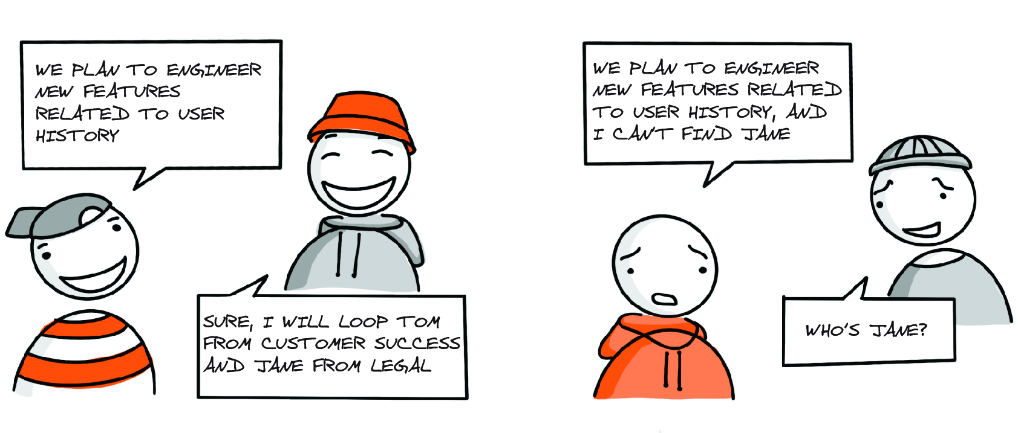
Compare explicit and implicit ways of involving people in a project. section 16.1

