A recommendation is an intentional selection of catalog items, chosen and ranked for a specific user or context. Unlike an alphabetical listing, it uses preferences, situation, or other users’ behavior to decide what appears and in which order. section 1.2
Recommendations vary by how much they personalize selection:
- User-to-item recommendations personalize results from an individual profile or preferences, such as “Recommended for you.” section 1.2
- Item-to-item recommendations relate an item to similar or co-consumed items. section 1.0
- Popular products rank widely consumed items without requiring individual personalization, yet still qualify as recommendations. section 1.2
A recommender system produces recommendations by combining content metadata, behavioral data, and contextual data. Production systems commonly use multiple stages: retrieve candidates, filter unsuitable items, score them, and rank the final results. section 1.0 section 2.2.6
A complete personalized recommendation
For a user with viewing history, retrieve items similar to recent watches, combine repeated candidates, exclude already watched movies, blend similarity with popularity, and return the highest-ranked results. A cold-start user with no history receives popular movies instead. section 2.2.6
Figure 1.1 A typical e-commerce landing page showing two types of recommendations: personalized ("Recommended for you") and non-personalized ("Popular Products"). The same page uses different recommendation strategies simultaneously.
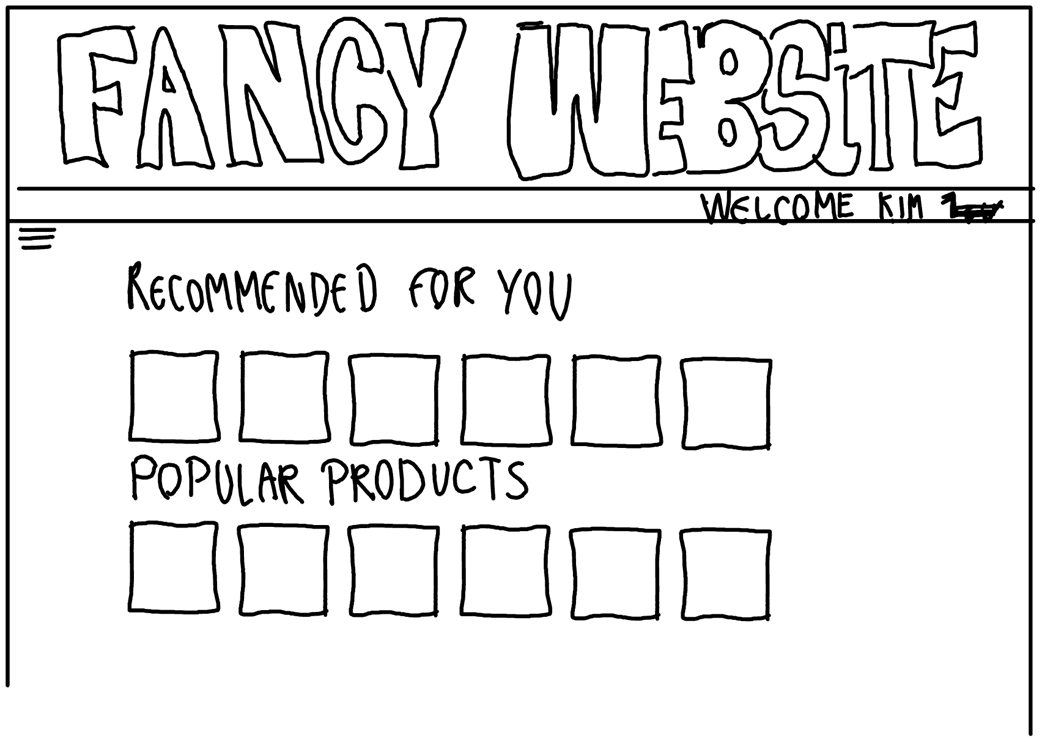
Compare personalized “Recommended for you” results with non-personalized “Popular Products” on the same e-commerce landing page. section 1.2