A recommendation is a content or item suggestion a recommender system makes for a particular user. A social feed may suggest content similar to what someone has already engaged with; a library might suggest books based on what a patron read and liked. section 1.0 section 2.3
Recommendations can serve users and platforms in several ways:
- Help people navigate large catalogues and find items that suit their needs. section 6.2
- Help platforms retain users or encourage purchases; a recommendation’s success may be measured by engagement rather than predicted ratings. section 6.1 section 6.2
Recommendations also shape what users encounter, while their clicks and other interactions provide signals for future recommendations. Because each affects the other, it can be difficult to separate the influence of the system from the influence of the user. section 1.0 section 4.6.2
From fountain pen to notebook
Someone buying a fountain pen might be shown a notebook or bottle of ink they had not considered. A relevant suggestion can make browsing easier while also encouraging an additional purchase. section 6.2
Figure 1.1 The feedback loop between user and recommender systems. Users and recommender systems are in a mutual feedback loop, with the output of one serving as the input to the other. The output of the algorithm, the recommendations, is the input for the users. The users’ output, what they engage with, is a signal for the recommender. On top of that, both the user and the recommender system update their internal state. Users change their minds and evolve their preferences over time, while algorithms learn users’ preferences and try to align more with them.
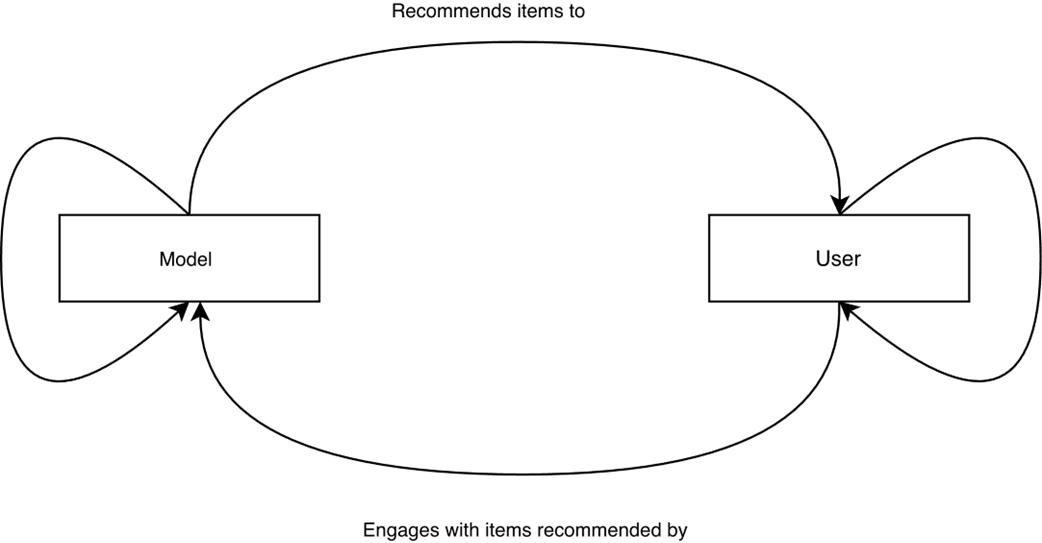
The diagram traces the feedback loop: recommendations shape what users see, and user interactions inform the recommender. section 1.0