Robotics designs, builds, and controls robots and robotic systems. Its practical value appears in machines that perform labor, especially repetitive industrial work or hazardous manipulation, but current systems remain specialized rather than human-like general workers. section 9.2
Representative milestones show how robotic capabilities developed:
- General Motors introduced a mechanical arm for hot-metal handling in 1961, later extending robots to welding and painting. section 9.2
- Henry Ernst’s 1962 computer-operated hand remotely manipulated radioactive materials using motors, fingertip light sensors, and programmed movement. section 9.2
- Shakey combined perception, machine learning, computer vision, navigation, planning, and route-finding while rearranging simple objects. section 9.2
From factory arm to mobile robot
A factory arm can weld or paint within tightly controlled conditions. Shakey extended the idea by perceiving surroundings, planning routes, and moving objects, yet both examples remained bounded by specific tasks. section 9.2
Figure 9.1 Shakey (image courtesy of the Computer History Museum)
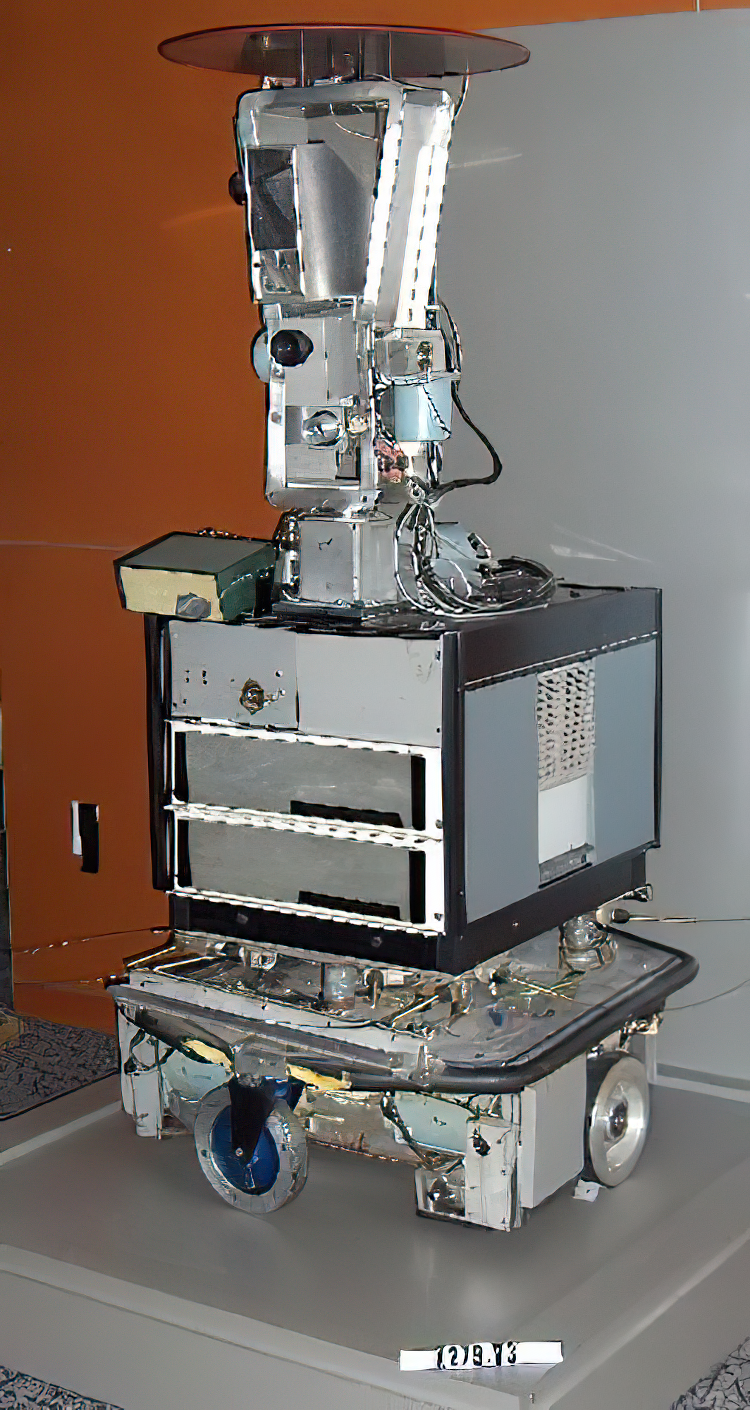
Inspect Shakey as an early mobile robot and experimental platform. section 9.2
Figure 9.2 ASIMO (2000) (image courtesy of Miraikan Museum, Tokyo)
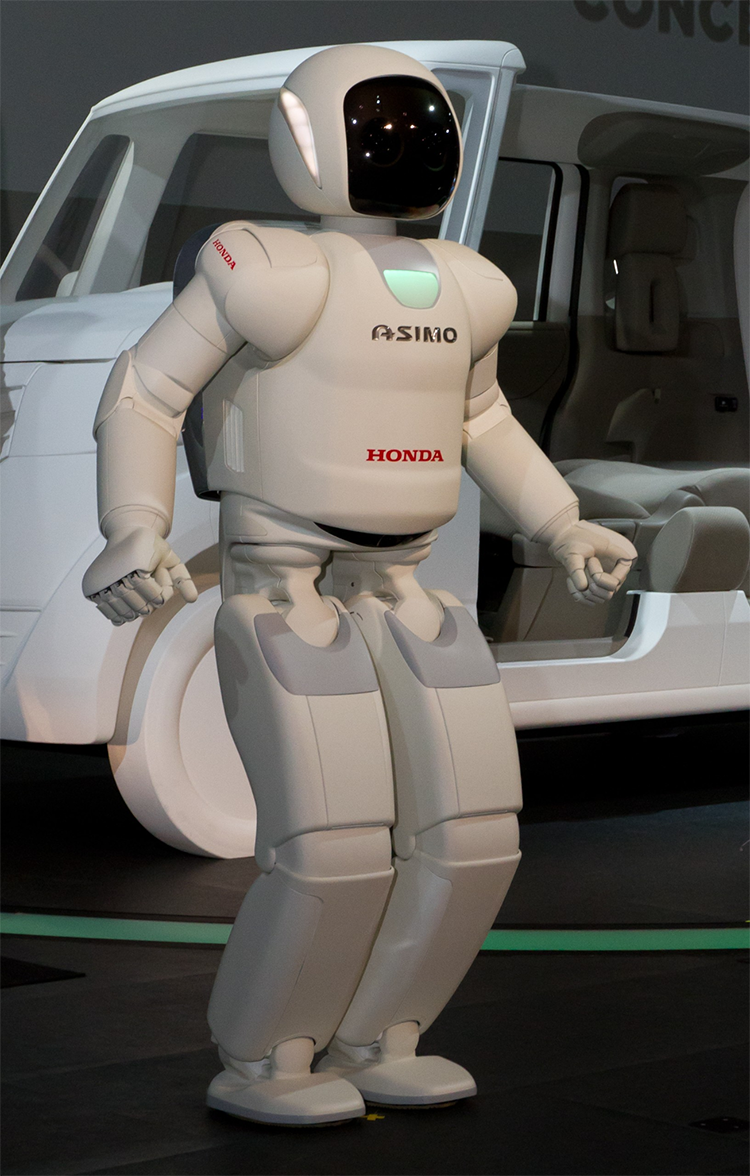
Inspect ASIMO as a 2000 humanoid-robot example. section 9.2

