When a team member is stressed, disengaged, or preparing to leave, the visible problem is not always the real problem. A root cause is an underlying factor responsible for an observed outcome, problem, or change. Finding it helps a manager choose support that addresses the situation rather than treating only its symptoms. section 3.2.2 section 8.4.2
Use a practical root-cause check when a morale or attrition problem appears:
- Listen through one-on-one conversations, open communication channels, feedback forums, or an exit interview. section 3.2.2 section 8.4.3
- Name the possible cause specifically, such as work dissatisfaction, inflexibility, personal circumstances, compensation, or project-related problems. section 8.4.2
- Separate controllable factors from circumstances outside the manager’s control. section 8.4.2
- Match the response to the cause: rebalance workload, provide support, adjust a project or role, explore internal mobility, or accept an unavoidable departure. section 3.2.2 section 8.4.2
- Look for recurring patterns across departures and use them to improve processes and retention practices. section 8.6 section 8.4.3
A resignation with different possible causes
Suppose David resigns. Work dissatisfaction, flexibility problems, personal circumstances, compensation, or project problems could each be a root cause. A project problem may be addressed through support or a project change; a family relocation to a region without a company presence may not be controllable. The appropriate response therefore depends on the cause, not merely on the resignation. section 8.4.2
Root-cause work is both responsive and preventive. After a departure, debrief the employee, gather additional information through human resources, identify trends, and address concerns among remaining team members. Each case can reveal gaps in workload, communication, career opportunities, compensation, or team processes. section 8.4.3 section 8.6
Figure 8.3 A sample offboarding checklist to use for a seamless transition when an employee departs the team
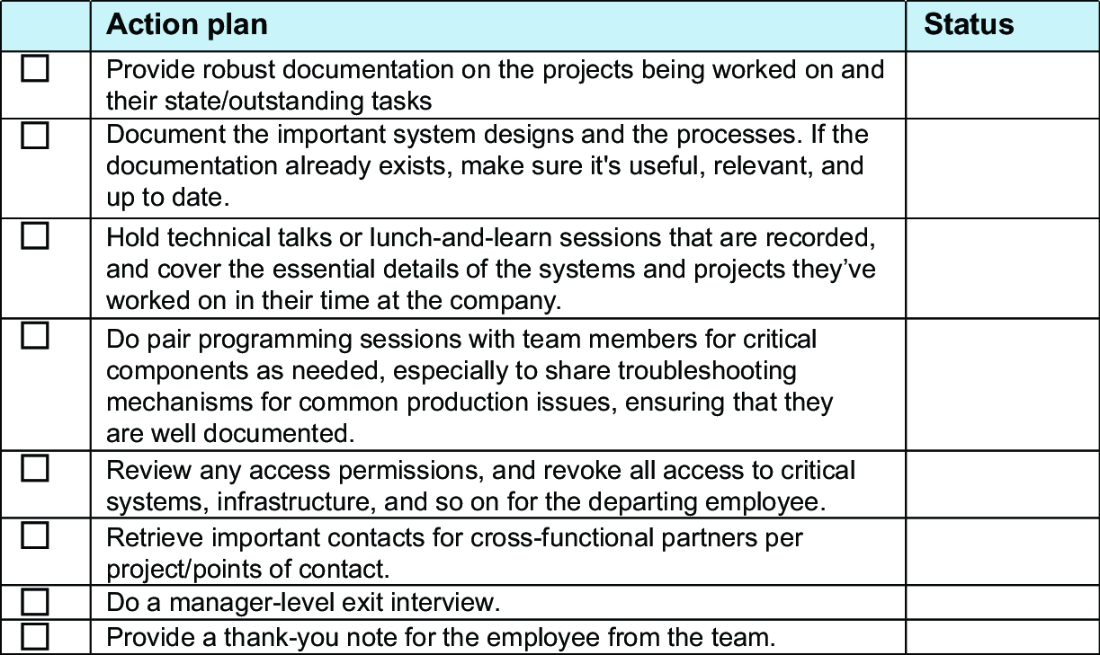
Use the offboarding checklist to support a smooth transition while investigating what the departure can teach the team. section 8.4.3




