A rule-based system produces outputs by applying explicitly specified conditions, logical rules, or keyword matches to input data. It automates repetitive decisions without learning patterns from training data. section 8.2.2
In analytics operations, teams can use rules to categorize support tickets, assign priority levels, and route work. Clear rules can improve efficiency, but designers must examine how those rules affect different groups. section 8.2.2
Support-ticket categorization
A consumer goods company tests a rules-based model alongside a supervised classification model. The system categorizes tickets as Product Problems, Delivery, Billing, Inquiries, or Suggestions and assigns Low, Medium, or High priority. section 8.2.2
Figure 8.4 An automated system for categorizing data can employ anything from simple rules to sophisticated machine learning algorithms.
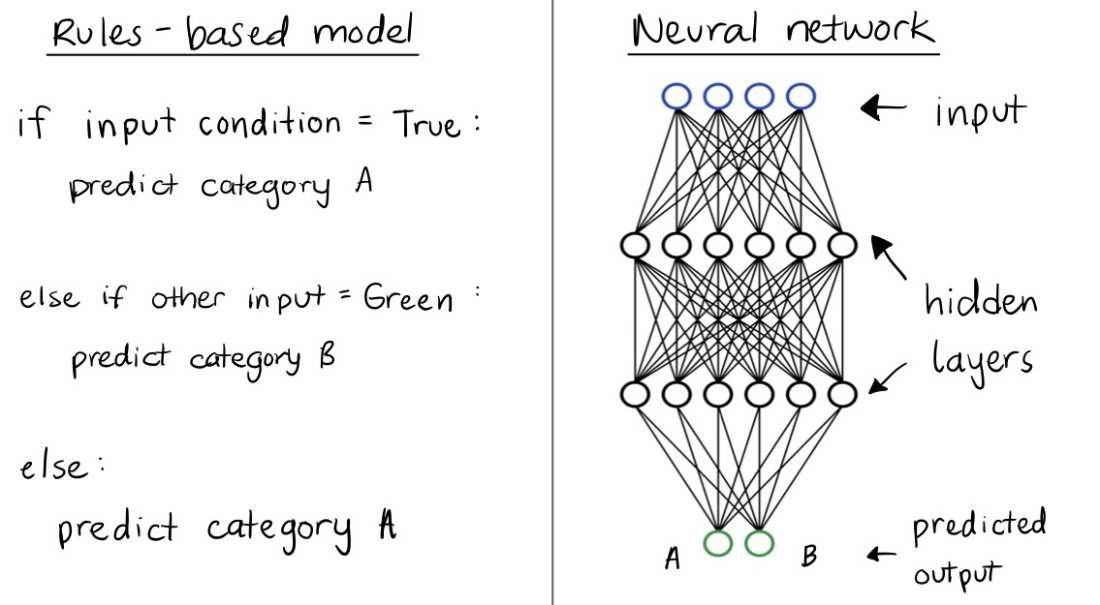
Places simple rules on a continuum with more sophisticated machine learning algorithms for automated categorization. section 8.2.2
Figure 8.5 The categorization system developed by the data science and analytics team can streamline the work of the customer support team. Still, it may have an unanticipated negative effect on certain groups of customers.
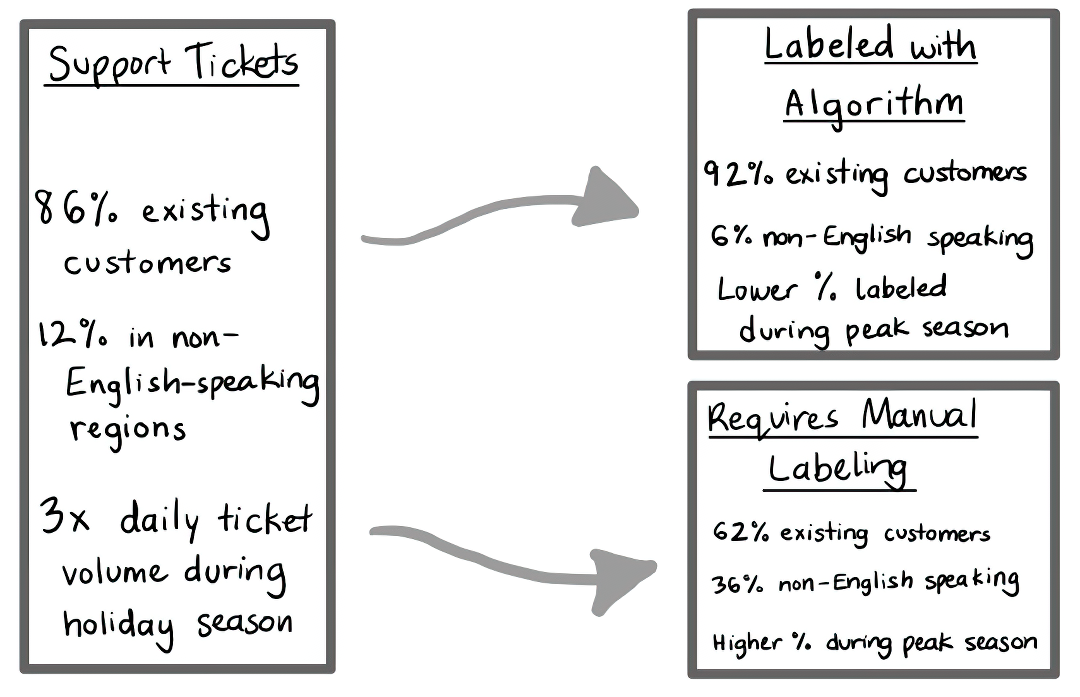
Highlights how automated categorization can streamline support work while producing unintended negative effects for certain customer groups. section 8.2.2





