liveBook · Manning

Self-loop

As explained in Graph Algorithms for Data Science

A self-loop is a graph relationship whose start node and end node are the same node.

A self-loop is a graph relationship whose start node and end node are the same node. In a graph schema, relationships between nodes with the same label can be represented this way. section 2.3.4
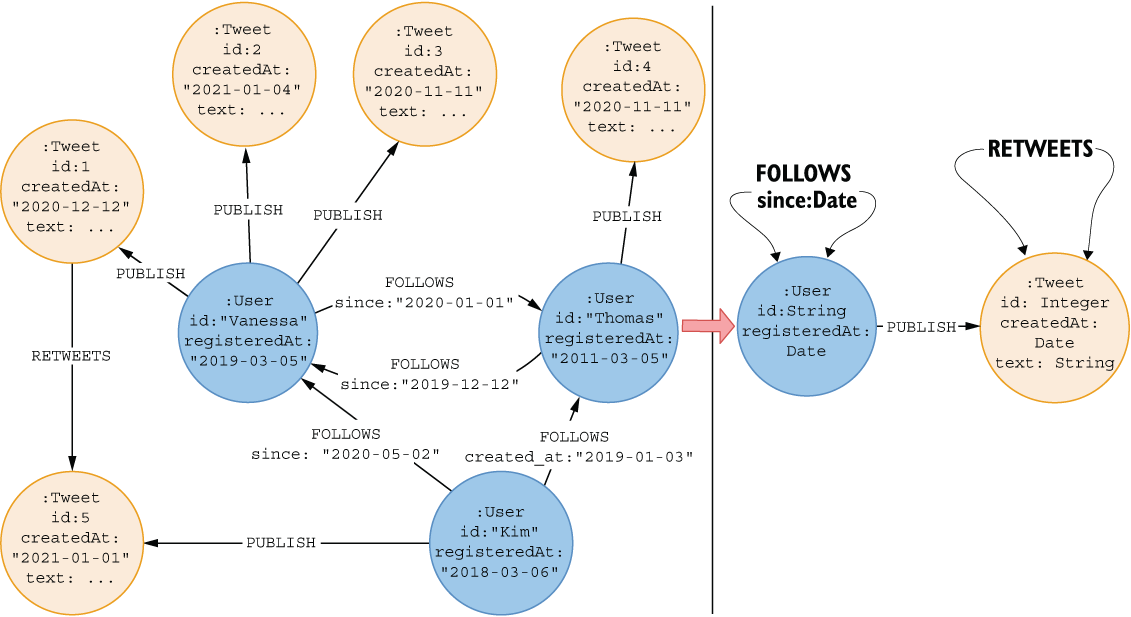
Figure 2.20 Twitter social network graph model representation
02-20

Use the Twitter graph-model figure to see FOLLOWS and RETWEETS represented as self-loops for same-label relationships. section 2.3.4

Self-retweet

A Twitter user can retweet one of their own posts. This creates a self-loop and may appear as a single-member weakly connected component. section 6.2.2

Self-loops can distort influence analysis. Before running weighted PageRank on a retweet network, project a new in-memory graph that filters out relationships whose endpoints are the same node. section 6.3 section 6.3.1


How Graph Algorithms for Data Science covers it

How deep it goes
Defines the relationship, illustrates it in a Twitter network, and applies a Cypher filtering procedure before PageRank.
Examples
Demonstrates self-loops through Twitter follows, retweets, self-retweets, component visualizations, and a no-self-loops projected graph.
What it assumes
Assumes basic graph relationships and Cypher patterns while defining self-loops in plain language.
What you can do after
Diagnose self-interactions and exclude them from a Cypher-projected graph before calculating weighted PageRank.
How it connects
Connects self-loops with labeled-property graphs, weakly connected components, graph projection, and PageRank.

Also explained in

Compare how 2 books explain self-loop →

Related concepts

This explainer was generated by Manning's knowledge graph from the text of Graph Algorithms for Data Science. The section links point to the parts of the book it draws on.