Serverless computing runs application code in an environment where the provider owns and maintains the underlying servers. You consume the platform through APIs and dashboards rather than provisioning machines. section 3.2.4
Its operational profile includes:
- No server administration or ordinary SSH access; provider APIs expose logs and metrics instead. section 3.2.4
- Less patching work because the provider typically handles operating-system and language-runtime security updates, while application vulnerabilities still require attention and testing. section 3.2.4
- Autoscaling changes compute capacity with workload demand, reducing capacity-management responsibility. section 3.2.4
The trade-off is practical rather than absolute: serverless usually reduces operational effort but also limits control. Workloads needing kernel modules, hardware configuration, or unavailable industry certifications may require managed servers instead. section 3.2.4 section 3.6
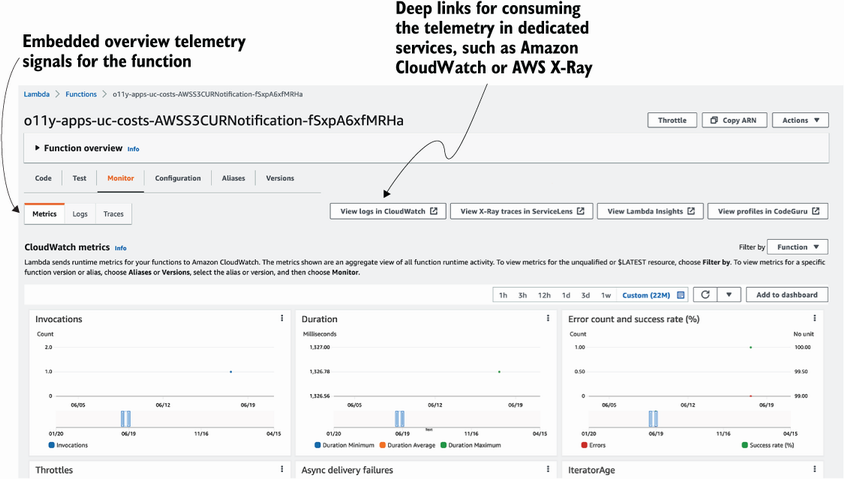
A provider console illustrates how serverless monitoring replaces host-level inspection with platform dashboards. section 3.2.4








