liveBook · Manning

Snapshot

As explained in Fundamentals of Cybersecurity

A snapshot is a point-in-time representation of data or system state that can support restoration to that state.

A snapshot is a full backup that captures a system or data at a specific point in time. Using hardware or software functionality, such as virtualization, it can create a near-instantaneous disk image for rapid recovery. The image preserves the data, configurations, and settings as they were at that moment. section 7.2

Snapshots support disaster recovery by giving an organization a point-in-time state to restore. They are one option among full, differential, and incremental backups; organizations can choose methods to suit their recovery needs and operational constraints. section 7.2 section 7.5

Figure 7.1 Summary of data recovery strategies with main use case and characteristics
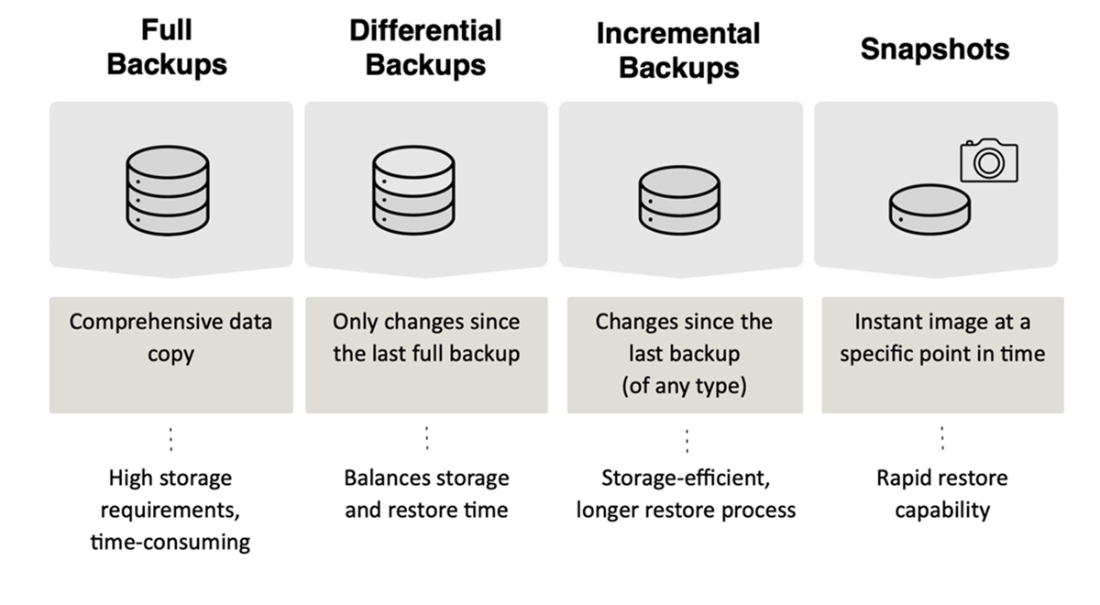
Compare snapshots with other data recovery strategies and their main use cases. section 7.2


How Fundamentals of Cybersecurity covers it

How deep it goes
Defines snapshots as near-instantaneous disk images containing data, configurations, and settings; stops short of creation or restoration steps.
What you can do after
Evaluate snapshots as a point-in-time recovery option within an organizational backup strategy.
How it connects
Connects snapshots with full, differential, and incremental backups and disaster recovery.

Also explained in

Compare how 12 books explain snapshot →

Related concepts

This explainer was generated by Manning's knowledge graph from the text of Fundamentals of Cybersecurity. The section links point to the parts of the book it draws on.









