Sorting orders query results by one or more fields or expressions. In an EF Core API, it makes a large board-game response easier for clients to consume by returning records in a predictable or requested order. section 5.4 section 5.4.2
EF Core supports two practical approaches:
- Database sorting appends an ORDER BY operation to the query, allowing the database engine to use indexes and caching while avoiding retrieval of every record. section 5.4.2
- Programmatic sorting retrieves unordered records and orders them in server or client memory, which becomes especially expensive when combined with paging. section 5.4.2
- OrderBy() handles a fixed lambda expression such as b => b.Name, but dynamic client-selected columns require additional handling because the standard overload does not accept a string. section 5.4.2
- System.Linq.Dynamic.Core enables string-based sorting, such as .OrderBy($"{sortColumn} {sortOrder}"), without writing a conditional branch for every sortable column. section 5.4.2
Board-game endpoint
A GET endpoint can accept sortColumn = "Name" and sortOrder = "ASC", apply the dynamic ordering before Skip and Take, and return a sorted page of board games. A default sort column of Name keeps requests predictable when the client supplies no value. section 5.4.2
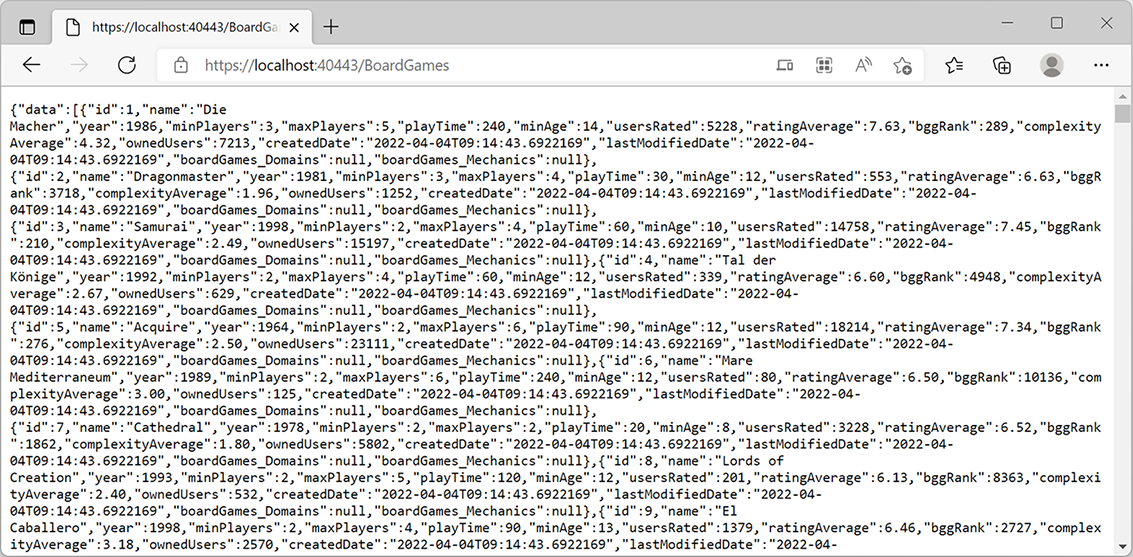
A long, unordered board-game response makes the practical need for configurable sorting, paging, and filtering immediately visible. section 5.4

















