A digital certificate is a signed data structure that binds a subject’s public key to identifying metadata, such as a domain name. It lets a browser decide whether it is communicating with a legitimate website rather than an attacker. section 9.2.1
Each certificate uses two asymmetric keypairs: the issuer signs the certificate with its private key, while the subject’s public key and metadata form the information being attested. Anyone who trusts the issuer’s public key can extend that trust to the subject. section 9.2.1
Figure 9.3 In digital certificates, an issuer signs the public key of a subject.
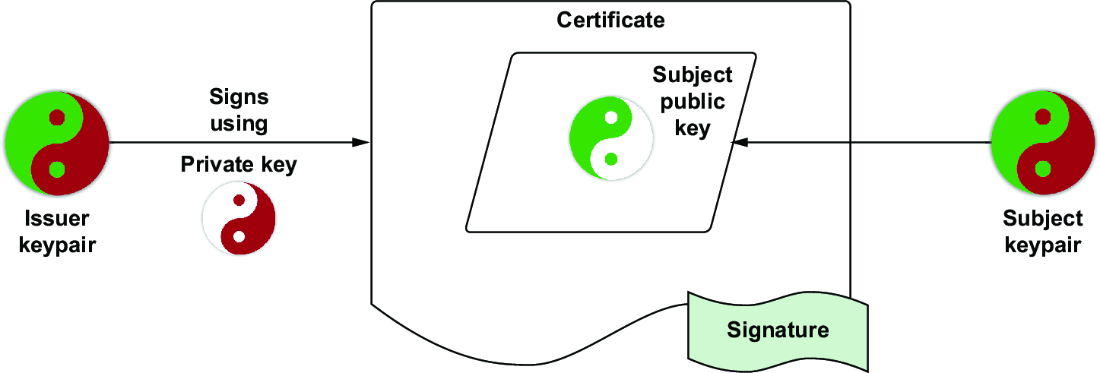
The issuer–subject relationship makes certificate trust concrete: one key signs an attestation about another key. section 9.2.1
Use certificates as links in a trust graph:
- Start from an explicitly trusted root public key, called a trust anchor. section 9.2.1
- Follow signatures through certificate chains to extend trust from the root to a website or other subject. section 9.2.1
- Protect signing private keys: forged signatures undermine the trust that certificates convey. section 9.7
Figure 9.4 Using a chain of signatures to trust websites. The public key for the root signature is self-signed and explicitly trusted by the browser.
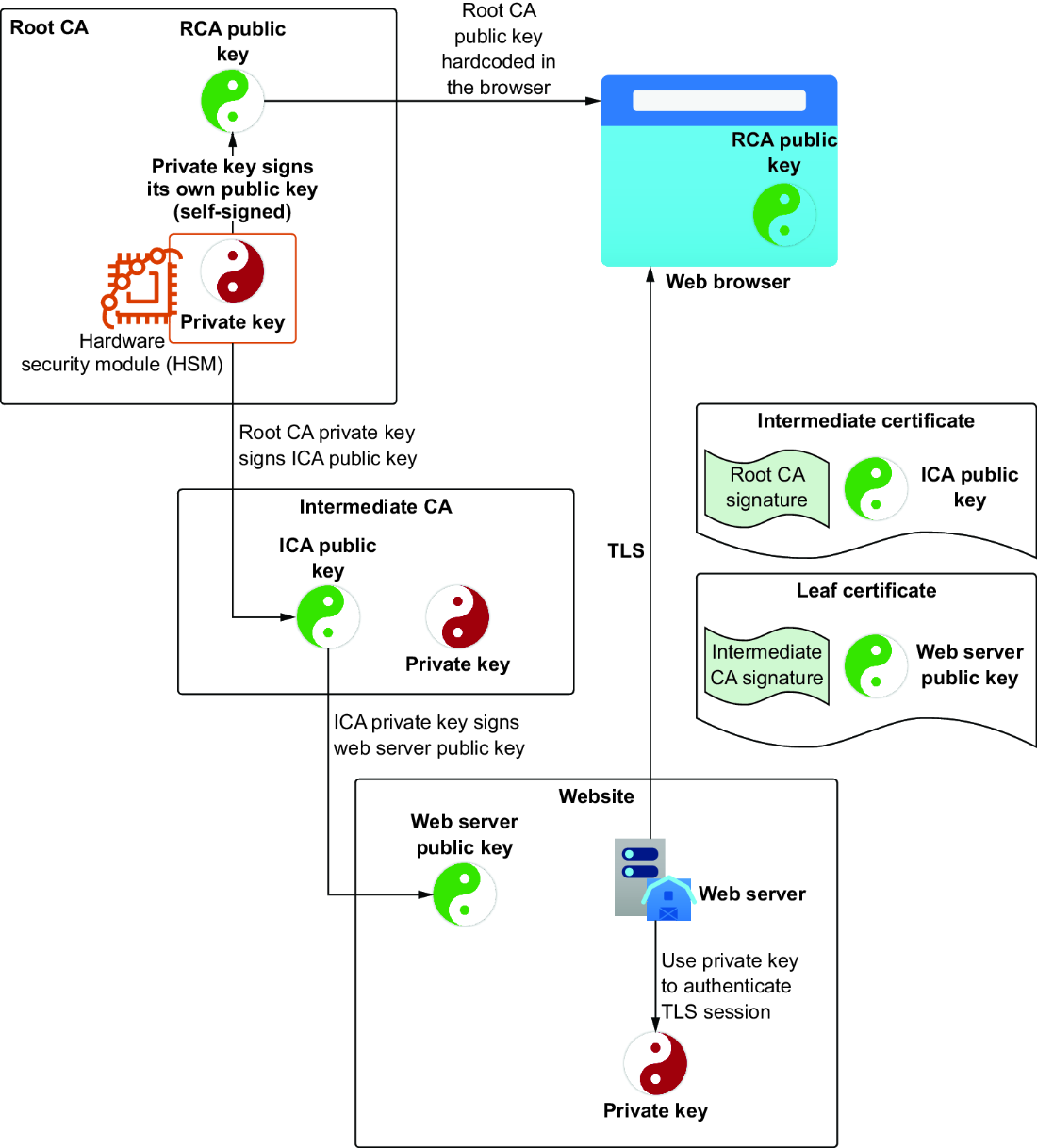
The chain-of-signatures model shows how a browser’s explicitly trusted root can establish trust in websites. section 9.2.1














