Synthetic control estimates the causal effect of a time-related event when an A/B test is impractical. It builds a predictive baseline for the treated outcome from correlated time series that remain unaffected by the event. section 11.0 section 11.3
A new movie release
To estimate whether releasing Star Wars VII increased views of Star Wars III, train a model on pre-release views of correlated Lord of the Rings movies. Forecasting after the release estimates what Star Wars III views might have been without the new film; the gap from actual views estimates the effect. section 11.3
Apply the method in four stages:
- Choose a pretreatment interval before event time T for training and a post-treatment interval afterward for evaluation. section 11.3.2 section 11.3.5
- Select control series that predict outcome Y, need not measure the same thing, and are not affected by the event. section 11.3.2 section 11.3.3
- Train a forecasting model using only pretreatment observations, then predict the outcome throughout the post-treatment interval. section 11.3 section 11.3.5
- Average the differences between predicted and factual outcomes to estimate the average treatment effect on the treated. section 11.3.4
Interpretation depends on three assumptions: controls predict the outcome before T, the event does not affect controls, and no nearby event changes the outcome–control relationship. Violating these assumptions can bias the counterfactual estimate. section 11.3.3
Figure 11.13 We can train a model with the data before the new release and predict after the release. These new predictions tell us what would have happened if there were no release. The effect of the release can be estimated by the difference between the real values and the predicted ones.
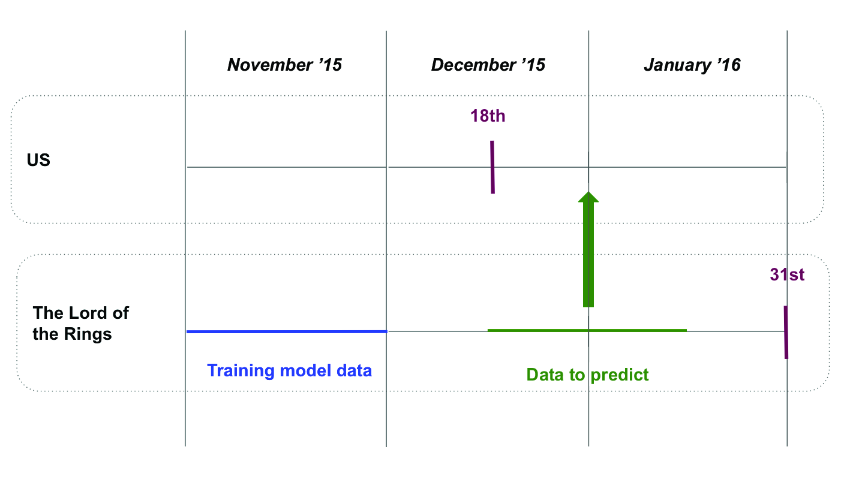
Follow the pre-event training and post-event forecasting diagram to see how predicted outcomes represent the no-event counterfactual and how their difference from actual outcomes estimates impact. section 11.3
