Teacher model
A teacher model is a model whose outputs, behavior, or learned representations provide training signals for another model.
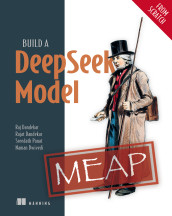
Build a DeepSeek Model (From Scratch)
A teacher model is a model whose outputs or learned behavior provide supervision for training another model.
- How it is used
- Uses a capable model to supervise smaller students for more practical deployment.
- How deep it goes
- Develops teacher supervision from soft-target distributions through a training loop, and contrasts online logit matching with offline response generation.
- Examples
- Uses a toy teacher-student network and DeepSeek-R1 reasoning traces to illustrate teacher supervision.
- What you can do after
- Builds a toy distillation pipeline from scratch, including a frozen teacher, student, loss, and training loop.
Read how Build a DeepSeek Model (From Scratch) explains teacher model →
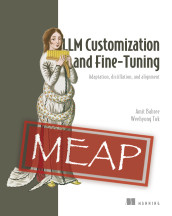
LLM Customization and Fine-Tuning
A model whose outputs or behavior provide targets for training a student model during distillation.
- How it is used
- Provides training targets for a smaller student intended to reproduce task behavior at lower serving cost.
- How deep it goes
- Explains teacher selection, output generation and filtering, followed by three-way evaluation and safety checks.
- Examples
- Uses an IT support assistant and a 50-example held-out comparison of base, teacher and student models.
- What you can do after
- Evaluate a teacher-student setup using behavioral, lexical and safety checks rather than assuming the student inherits every teacher capability.
Read how LLM Customization and Fine-Tuning explains teacher model →
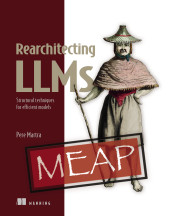
Rearchitecting LLMs
A teacher model is a model whose outputs or behavior guide the training of a student model during knowledge distillation.
- How it is used
- Uses a teacher to recover pruned students or guide a specialized model replacing an agent call.
- How deep it goes
- Works through teacher configuration, shared-input logits, KL-divergence loss, student updates, and validation data preparation.
- Examples
- Uses an 18-layer Gemma teacher for a 16-layer student and a frontier model as teacher for an agent sub-task.
- What you can do after
- Applies knowledge distillation using PyTorch and OptiPFair to recover a pruned student from a teacher’s predictions.
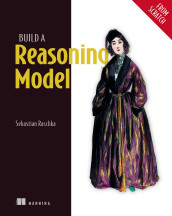
Build a Reasoning Model (From Scratch)
A larger model whose outputs or signals are used as training targets for a smaller student model during distillation.
- How it is used
- Uses a stronger reasoning model to generate supervision for training a smaller, more computationally efficient student.
- How deep it goes
- Explains teacher outputs, reasoning traces, hard versus soft targets, and practical trade-offs, stopping short of teacher architecture internals.
- Examples
- Uses DeepSeek-R1 as teacher, Qwen3 0.6B as student, and MATH training problems with generated reasoning traces and answers.
- What you can do after
- Apply it via hard distillation by generating teacher traces and training a smaller student with supervised targets.
Read how Build a Reasoning Model (From Scratch) explains teacher model →
Retrieval Augmented Generation, The Foundational Ideas
A teacher model is a larger or more capable model whose outputs or behavior provide supervision for training a student model.
- How it is used
- Uses a stronger model to generate supervision for adaptive retrieval and self-critique.
- How deep it goes
- Explains classical and behavioral distillation, then compares critic choices and deployment tradeoffs.
- Examples
- Uses GPT-4, Llama 3 70B, Qwen 2.5 72B, Mixtral 8x22B, and domain-specific critics as alternatives.
- What you can do after
- Evaluate/understand how teacher-generated examples transfer retrieval and critique behavior to a deployable student.
Read how Retrieval Augmented Generation, The Foundational Ideas explains teacher model →
Building Reliable AI Systems
A larger, more capable model whose behavior or outputs serve as the target for a smaller model to learn.
- How it is used
- Supplies target outputs that a smaller student imitates to reduce deployment cost and latency.
- How deep it goes
- Describes prompt–response distillation and contrasts it with probability-based methods, without requiring access to logits.
- Examples
- Illustrates teacher outputs with e-commerce support answers, including a damaged-item return exchange.
- What you can do after
- Build a smaller student by collecting teacher responses to domain prompts and fine-tuning on the resulting pairs.
Read how Building Reliable AI Systems explains teacher model →
Also covered in
- Transformers in Action
- LLMs in Production
- Introduction to Generative AI, Second Edition
- Machines that ThinkIn early access (MEAP)
What to know first
- language modelA language model is a computational model that represents patterns in linguistic sequences to assign probabilities, predict, generate, or evaluate language.
- objective functionAn objective function is a mathematical function that assigns values to candidate solutions or parameter settings, which an optimization procedure seeks to minimize or maximize.
- distillationDistillation is a training technique in which a student model learns to approximate the outputs or behavior of a teacher model.
- fine-tuningFine-tuning is the continued training of a pretrained model on targeted data or objectives to adapt its parameters or behavior to a task, domain, or use.
Related concepts
- distillationused by · Distillation is a training technique in which a student model learns to approximate the outputs or behavior of a teacher model.
- soft targetproduces · A soft target is a target representation that assigns probabilities or graded weights to multiple possible outputs rather than selecting a single categorical label.
- arrayproduces · An array is an ordered collection of elements organized in one or more dimensions and accessible by position or index.
- student modelused by · A student model is a model trained with guidance from a teacher model to approximate its outputs, behavior, or learned capabilities.
- no_grad()used by · torch.no_grad() is a PyTorch context manager and decorator that disables autograd gradient tracking for operations performed within its scope.
Questions about teacher model
What is teacher model?
A teacher model is a model whose outputs, behavior, or learned representations provide training signals for another model.
Which Manning books explain teacher model?
Build a DeepSeek Model (From Scratch), LLM Customization and Fine-Tuning, Rearchitecting LLMs, Build a Reasoning Model (From Scratch), Retrieval Augmented Generation, The Foundational Ideas and Building Reliable AI Systems.
What should I know before learning teacher model?
Manning books that teach teacher model usually introduce language model, objective function, distillation and fine-tuning first.
These guides are generated from the text of Manning books by Manning's knowledge graph and link to the sections they draw on. The full books are available on liveBook and at manning.com.