liveBook · Manning

Test script

As explained in Software Testing with Generative AI

A predefined sequence of instructions for executing a software test and checking its expected outcome.

A test script is a predefined sequence of instructions for a human or machine to execute and use to confirm an expected outcome. It can check requirements, critical paths, and expected system behavior. section 3.1

Test scripts are useful when they remain one part of a broader testing approach:

  • They connect explicit expectations with checks for unexpected changes as a product evolves. section 3.1.2
  • Using only scripts can miss edge cases, complex bugs, and important behavior; exploratory, performance, user experience, and collaborative design activities address other risks. section 3.1 section 3.1.2
Figure 3.2 The imagination/implementation model with sample activities shown
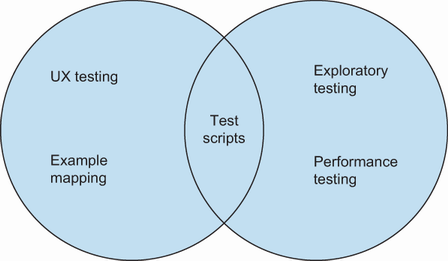
The imagination/implementation model places test scripts alongside other activities, showing their complementary role in risk-focused testing. section 3.1.2


How Software Testing with Generative AI covers it

How deep it goes
Defines the role and limitations of scripts but stops short of specifying scripting syntax or execution procedures.
Examples
Uses human- or machine-followed instructions, expected outcomes, and an imagination/implementation model of testing activities.
What it assumes
Assumes explicit expectations and a basic understanding that testing gathers information about product risks.
What you can do after
Evaluate where scripted checks help and where broader testing activities are needed to address additional risks.
How it connects
Connects test scripts with requirements, automated checks, exploratory testing, performance testing, and user experience testing.

Also explained in

Compare how 2 books explain test script →

Related concepts

This explainer was generated by Manning's knowledge graph from the text of Software Testing with Generative AI. The section links point to the parts of the book it draws on.