Threat detection identifies suspicious activity that may indicate an attack while container workloads run. In Kubernetes, effective monitoring covers both the control plane and worker nodes, helping surface crypto-mining processes, fileless attacks, malicious images, and unauthorized processes. section 4.4.3 section 7.2.2
Microsoft Defender for Containers applies layered runtime detection:
- Collects Kubernetes audit logs and security events from the API server to detect threats at the cluster and control-plane level. section 7.2.2
- Deploys the Microsoft Defender profile on each worker node to collect node signals for analysis in Defender for Cloud. section 7.2.2
- Uses auto-provisioning to deploy the Defender profile across nodes in an Azure Kubernetes Service cluster. section 7.2.2
- Generates a security alert when confidence is sufficiently high that suspicious activity represents an attack, then supports deeper investigation and response through Microsoft Sentinel. section 4.4.3
Runtime attack signal
A process started inside an immutable production container is suspicious. If an attacker deploys a crypto-mining image or launches a fileless attack, monitoring can detect the activity and raise an alert; patching the running container is not a durable fix because scale-out recreates it from the registry image. section 4.4.3 section 7.2.2
Figure 7.4 An architecture diagram of Defender for Containers for an Azure Kubernetes Service cluster
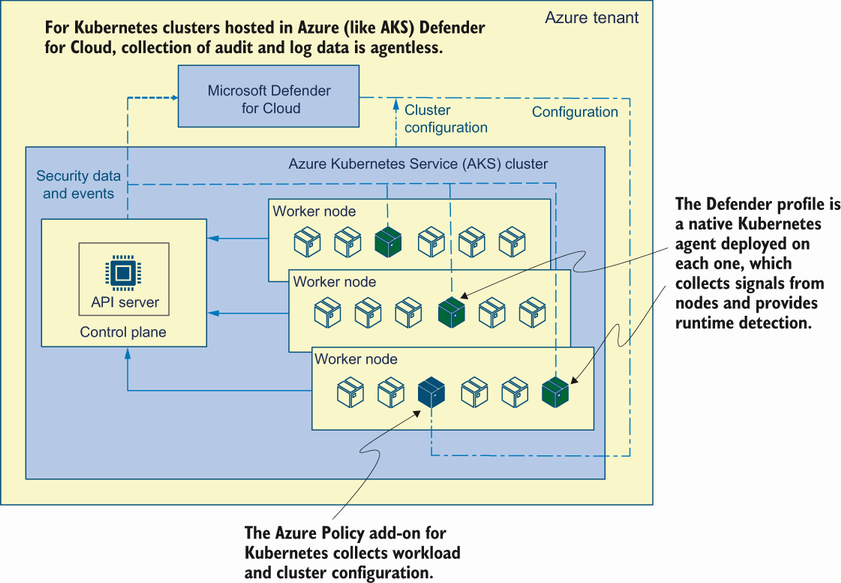
Use the architecture diagram to trace how Defender for Containers receives signals from an Azure Kubernetes Service cluster. section 7.2.2

