A rate limit constrains how frequently or how many times a system may receive requests during a specified interval. In agentic systems, it places a ceiling on runaway tool or API activity instead of allowing an agent to continue indefinitely. section 3.2.4 section 11.2
Figure 3.12 Comparing the execution steps an LLM application (assistant) and an agent perform when consuming tools from an MCP server. The key differences between MCP tool execution from an LLM application (Claude Desktop) or through an agent are these: assistants require human supervision, while agents are autonomous; assistants are interactive, while agents are programmatic; agents perform more complex, multistep workflows, while assistants are typically limited to simple plans.
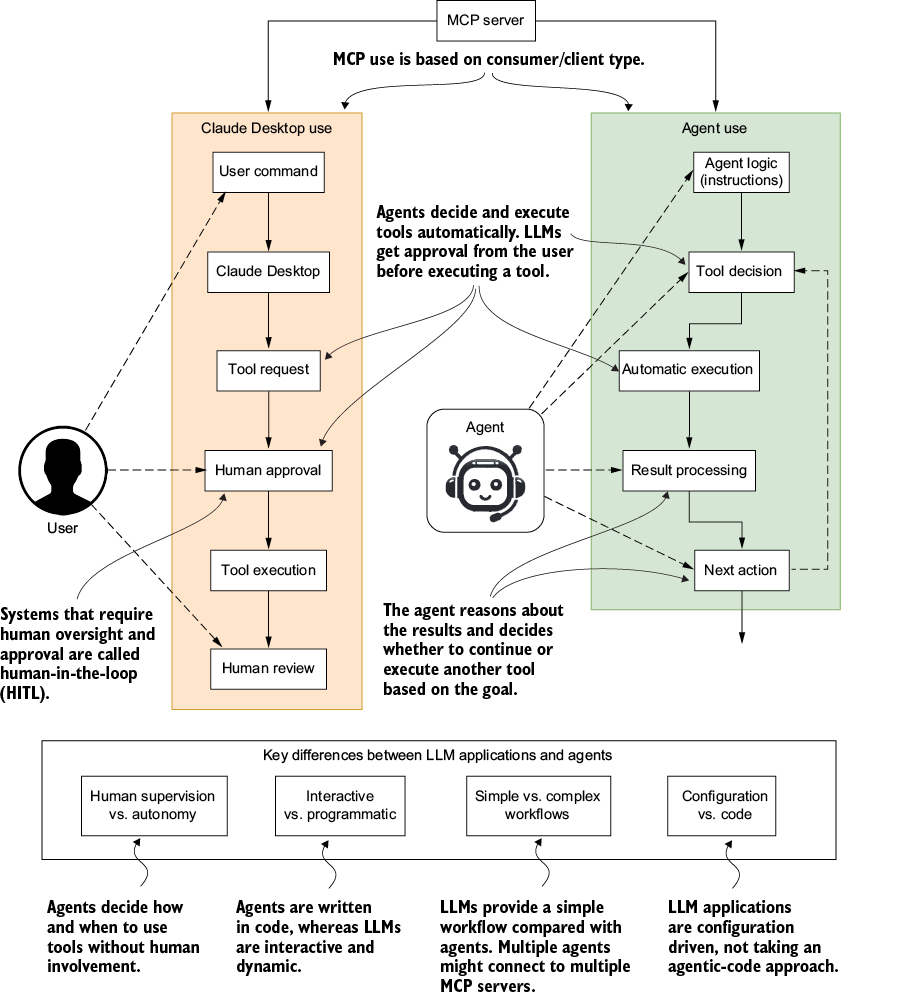
Compare supervised assistants with autonomous agents: agents perform multistep workflows, making ceilings important when tool calls can compound mistakes. section 3.2.4
Use rate limits as part of practical agent safeguards:
- Throttle external APIs to protect reliability and control costs. section 11.2
- Pair limits with tool allowlisting, sandboxing, output validation, budget caps, and human checkpoints. section 3.2.4
- Cache popular answers before imposing repeated demand on external services. section 11.2
Customer support agent
A support agent can cache a frequently requested refund policy and throttle external APIs, while retries, fallbacks, timeouts, and friendly failure messages handle service problems. section 11.2













